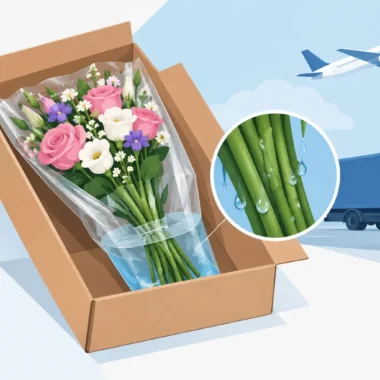
A bouquet can leave the workbench looking spot-on and still arrive with bruised heads, snapped stems or a wet, weakened outer wrap. Flower transport boxes are a practical part of protecting the value of every order, whether you are sending funeral tributes across town, supplying event flowers or making local retail deliveries during a busy weekend.
For florists and flower retailers, the right box is not simply an outer layer. It needs to hold the arrangement securely, suit the vehicle and delivery route, give staff a straightforward packing process, and present the order professionally when it reaches the customer. Getting the specification right reduces waste, protects margins and helps deliveries leave the premises ready for the journey ahead.
What flower transport boxes need to do
Flowers are awkward cargo. They are tall, top-heavy, moisture-sensitive and easily damaged by pressure or movement. A box that is too wide allows buckets, bouquets or arrangements to shift around. One that is too tight can crush foliage, catch delicate petals or bend stems at the point where they need support.
The best choice depends on what is being transported. A hand-tied bouquet needs a different shape of packaging from a planted arrangement, a vase gift or a large sympathy tribute. Rather than treating every order alike, it pays to match the box dimensions and board strength to the product and the journey.
A useful transport box should provide enough rigidity to resist stacking pressure, especially when several orders are travelling in one van. It should also be easy to close and carry without exposing the flowers to handling damage. Where water-filled containers are involved, moisture protection matters just as much as structural strength. Damp cardboard quickly loses its shape and can create an untidy handover at the door.
Choosing the right size and format
Start with the finished product, not the available box. Measure the arrangement at its widest and tallest point after wrapping, including any extended foliage, presentation paper and ribbon. Allow sensible clearance around the flowers so they are not pressed against the sides, but avoid excess empty space that creates movement.
For regular bouquet work, keeping a small range of commonly used carton sizes can make packing quicker and more consistent. Narrow, taller boxes are often useful for long-stemmed flowers, while wider formats better suit mixed seasonal bouquets with generous heads and foliage. For gift work, a shallower box may be appropriate where the flowers sit alongside a card, chocolates or another retail item.
Large arrangements create their own problems. A box may be wide enough but still lack the strength to support the weight of a container, floral foam or water source underneath. In those cases, a reinforced base, a separate tray or careful internal support can prevent the arrangement from tipping. The packing method should work for the team on a busy trading day, not only when one experienced person is available to prepare it.
Allow for the delivery vehicle
Box dimensions need to work with the vehicle as well as the arrangement. Before standardising a carton, check how many units fit safely on the shelves, floor or transport racks used for deliveries. A box that looks efficient at the packing bench may not stack safely in a small car or van.
Avoid relying on the driver to solve a packing issue on the road. If boxes are likely to slide, tilt or be stacked incorrectly, build in a simple system at the dispatch stage. This may mean grouping orders by size, using dividers, keeping heavier work low down or filling gaps with suitable protective material. It is quicker than remaking damaged work after a delivery run.
Board strength and moisture protection
Not all cardboard packaging is intended for the same job. Lightweight cartons can be a cost-effective option for short, dry journeys where flowers are well wrapped and handled carefully. For heavier displays, longer routes or multiple handling points, stronger corrugated board is usually the safer choice.
Consider the full weight of the item rather than the flowers alone. Water, ceramic containers, glass vases and soaked floral foam add weight quickly. The base of the box is particularly important. If it bows when lifted, the order becomes difficult to carry and the flowers can be damaged even if the sides remain intact.
Water management deserves attention in every delivery process. Bouquet bags, liners or protective sleeves can help contain moisture before the item is placed in the box. A watertight inner layer may be needed for designs supplied in water. The goal is to keep the flowers hydrated without allowing water to reach the carton, retail packaging or any accompanying gifts.
There is a trade-off here. Extra protection adds material cost and packing time. However, the cost of replacing one damaged wedding bouquet, tribute or corporate order will usually outweigh the cost of using suitable packaging from the outset.
Packing flowers securely without overpacking
A transport box works best when the arrangement is stabilised inside it. This does not mean filling every gap with packaging. Too much material can snag petals and make the product harder for the customer to remove. Instead, support the parts most likely to move: the base, the container and the stems.
For hand-tied bouquets, make sure the stems are secure, the wrapping is properly closed and the flower heads have enough headroom. If the bouquet is travelling in water, check that the water source is protected and cannot leak if the box is carried at an angle. For vase arrangements, secure the vase at the base before addressing the flower heads above it.
Before sealing, lift the box gently and check for movement. If the arrangement shifts, adjust the support rather than hoping it will remain upright in transit. This simple check is especially worthwhile for orders that will pass between several staff members, a courier or a customer collecting from the shop.
Keep the opening experience in mind
Transport packaging needs to protect the goods, but it is still part of the customer experience. A box that is difficult to open, soaked at the base or crowded with loose material can undermine otherwise excellent floristry.
Where presentation matters, use clean outer packaging and make sure labels are clear and correctly placed. Include delivery information where required, but avoid placing labels where they obscure branding, message cards or handling instructions. A professional-looking handover reassures both the recipient and the person who placed the order.
Build a repeatable packing routine
Busy periods expose weak processes. Mother’s Day, Valentine’s Day, Christmas, local events and funeral work can all place pressure on stock and packing capacity. The most dependable approach is to decide in advance which box format suits each core product line, then keep enough stock available to cover expected demand and a sensible contingency.
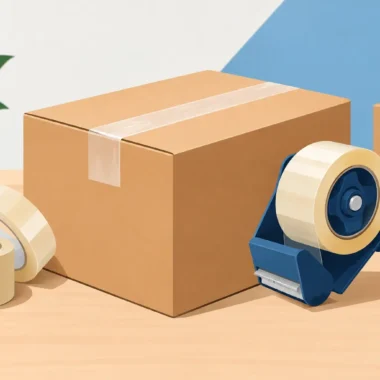
A simple packing station helps staff work consistently. Keep the relevant cartons, tape, protective materials, bouquet bags, tissue, labels and marker pens together. If a team member has to search the storeroom for a compatible box or tape dispenser, dispatch slows down and mistakes become more likely.
It is also worth reviewing delivery issues after peak periods. If one carton size is regularly oversized, if water damage is recurring, or if drivers report that certain boxes are awkward to secure, change the process while the evidence is fresh. Small adjustments can save considerable time across a season.
Buying transport packaging for regular trade use
For trade buyers, availability matters as much as specification. A box that works well but cannot be replenished when orders increase is not a dependable part of the operation. Buying commonly used formats in practical quantities helps avoid last-minute substitutions that compromise presentation or protection.
It can also be more efficient to source transport cartons alongside the wider consumables used for preparation and dispatch, including cellophane, bouquet bags, carrier bags, tissue, labels, tape and packing paper. Consolidating these routine purchases makes stock control simpler and reduces the time spent placing separate orders.
The Baggery Sundries supports businesses that need to replenish floristry supplies and retail packaging without turning purchasing into another daily task. For products with unusual dimensions or specialist requirements, it is sensible to confirm the size, weight and use case before committing to larger quantities.
A well-chosen flower transport box does its job quietly: it keeps the arrangement upright, dry and protected, helps your team pack with confidence, and allows the customer to receive flowers in the condition you intended.