A cash drawer insert is easy to overlook until a busy Saturday leaves notes mixed with receipts, coins short for change and staff wasting time at the till. The best cash drawer inserts are not simply the ones with the most compartments. They fit the drawer correctly, match the way you take payment and make every handover quicker and easier to check.
For florists, gift shops, farm shops, garden centres, market stalls and other independent retailers, the right insert helps keep a small but vital part of the operation under control. It supports accurate change, cleaner cashing-up and a more professional counter during the busiest trading periods.
Start with the cash drawer, not the insert
The first rule is straightforward: measure the internal space of the cash drawer before ordering. A replacement insert that is only a few millimetres too wide may buckle at the edges or stop the drawer from closing properly. One that is too small can slide about whenever the drawer opens, causing coins and notes to move out of place.
Measure the internal width, depth and height, allowing for any runners, lock mechanism or raised edges inside the drawer. Do not rely solely on the external dimensions printed on the till or drawer casing. If the existing tray is still available, measuring it is often the quickest route to a compatible replacement.
Also check how the drawer opens. A manual cash drawer, a drawer connected to a receipt printer and a full electronic point-of-sale unit may all use different layouts. The insert itself does not usually control the opening mechanism, but it must sit neatly inside the drawer without fouling cables, catches or the lid.
Check the number of note and coin compartments
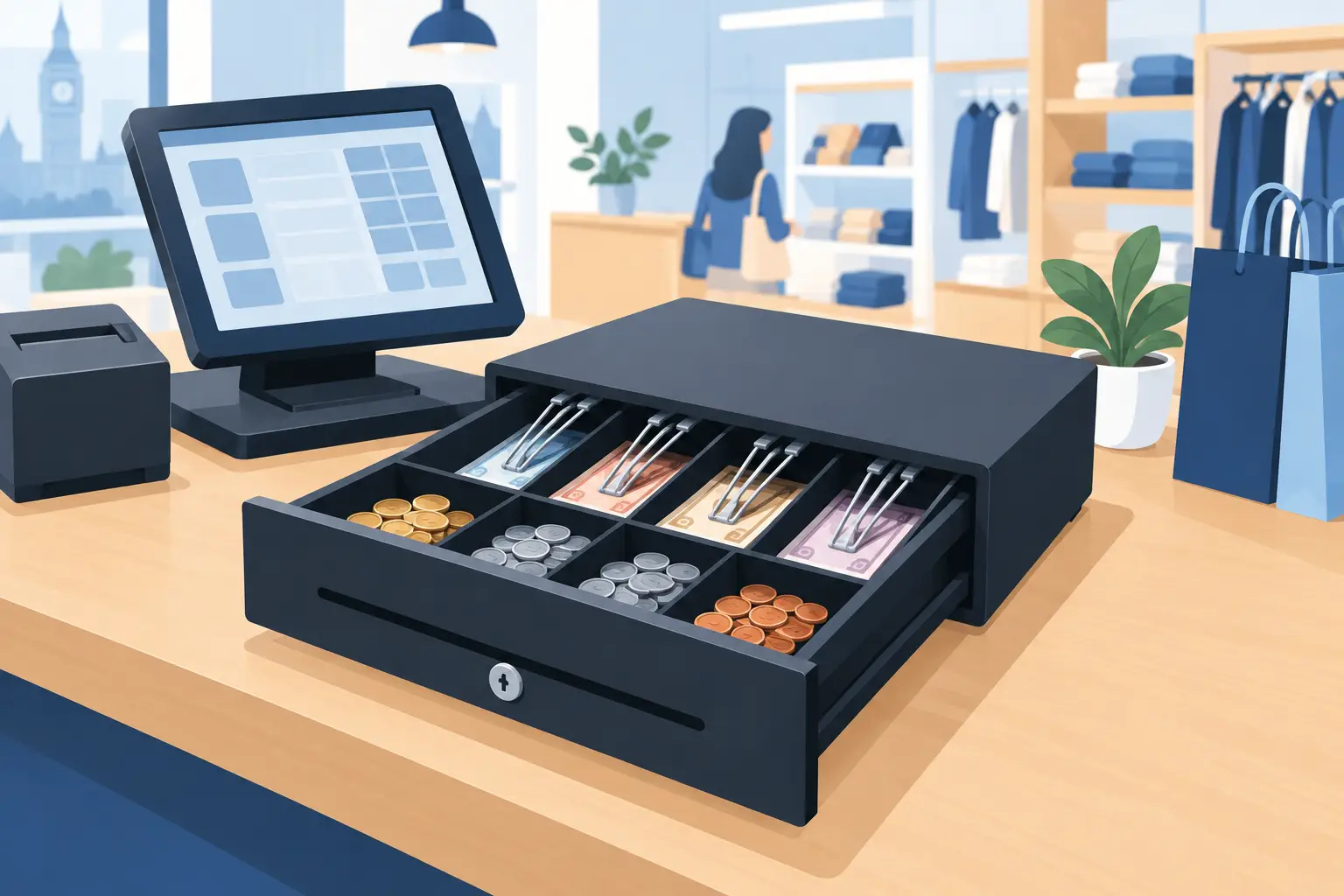
A typical UK retail insert will have separate sections for notes and coins, but the exact balance matters. Most smaller shops need enough space for £5, £10 and £20 notes, with a section for £50 notes if they are regularly accepted. Coin compartments should make it easy to separate the denominations used most often for change.
More compartments are not automatically better. A compact counter setup may benefit from a simple layout that staff can learn quickly. A high-turnover shop, café or market business may need additional coin capacity, particularly where many customers still pay with cash or where float levels need to remain consistent throughout the day.
Think about your real payment pattern rather than an ideal one. If £1 coins and £5 notes move constantly, those sections need to be easy to reach and large enough not to overflow halfway through service. A rarely used compartment can be reserved for higher-value notes, vouchers or foreign currency where appropriate.
What separates the best cash drawer inserts from basic trays?
A well-made insert earns its place through daily use. The material needs to withstand repeated opening, closing and removal for cashing-up. Plastic inserts are common because they are lightweight, practical and straightforward to wipe clean. A more substantial moulded tray is often worth choosing for a busy counter, as it is less likely to flex or crack under the weight of coins.
Look closely at the note clips. Strong metal clips hold notes securely when the drawer is opened sharply, particularly if the till is used at speed. However, clips should not be so stiff that staff struggle to remove notes during a sale. This is a small detail, but it affects every cash transaction.
Raised dividers are equally useful. They keep coin denominations distinct and make it easier to spot when a compartment is running low. Shallow coin sections can be frustrating where a business carries a larger float, while excessively deep sections may slow staff down when they need to pick out individual coins. The right depth depends on volume.
For mobile traders, pop-up shops and businesses taking tills to seasonal events, stability matters even more. A tray that sits firmly inside a portable cash drawer helps avoid a muddled float after moving between locations or loading stock into a vehicle.
Choose a layout that suits your staff routine
The layout should support quick, consistent habits. Where several employees use the same till, everyone needs to know where to find and return each denomination without stopping to think. This reduces mistakes during a queue and makes discrepancies easier to investigate at the end of a shift.
A conventional note-at-the-back, coin-at-the-front layout works well for many retail counters. It keeps coins within easy reach for giving change while leaving notes flat under their clips. Some businesses prefer the reverse arrangement or a different configuration because of the position of the operator, the height of the counter or the drawer opening direction. There is no universal best arrangement, provided it is logical and used consistently.
It is also worth considering receipts, gift vouchers and petty cash. If these items regularly end up loose in the drawer, choose an insert with a spare compartment or establish a separate place for them. Mixing paperwork with money makes cashing-up slower and can conceal errors.
Removable inserts simplify cashing-up
A removable cash drawer insert is particularly useful when tills are counted in a back office or handed over between shifts. Rather than counting cash at the counter while customers wait nearby, staff can lift out the full insert and replace it with a prepared float where the setup allows.
This approach can be helpful in shops with opening and closing teams, or during peak periods such as Christmas, Valentine’s Day and Mother’s Day for florists and gift retailers. It does require discipline: each insert should be clearly assigned, counted and returned securely. A removable tray improves speed, but it is not a substitute for a clear cash-handling process.
Consider security alongside convenience
The insert is only one part of cash security, but it affects how safely money is handled during the day. Note clips prevent loose notes lifting or shifting when the drawer opens. Clearly divided coin sections make it easier to identify an unusual shortage or surplus. A tidy drawer also discourages staff from using it as a place for personal receipts, keys or other items.
For higher-value cash takings, review the whole arrangement. This may include the quality of the drawer lock, who has access to keys, how often excess notes are removed and where the cash is counted. An insert with plenty of capacity can reduce clutter, but it can also encourage too much cash to remain at the point of sale. Regular safe drops or transfers remain sensible where takings justify them.
If your business operates more than one till, standardising the inserts across them can make training and shift cover easier. Staff moving from one counter to another will work more accurately if the note and coin positions are familiar.
Avoid common replacement mistakes
The most frequent problem is ordering by appearance alone. Two inserts may look almost identical online but differ in depth, corner shape or the position of the note clips. Always compare measurements and compartment layout before replacing an existing tray.
Another mistake is buying for the current float without allowing for peak trade. A florist may need modest coin storage for much of the year, then find the tray inadequate when seasonal footfall increases. A gift shop that sells low-value add-on items may need far more £1 coins and £5 notes than a business focused on larger transactions.
Finally, do not assume a damaged insert is merely cosmetic. Cracked dividers, weak clips and warped edges slow down every transaction and make cash counts less reliable. Replacing a worn tray is a modest operational cost compared with repeated delays, avoidable mistakes and untidy presentation at the counter.
A practical buying checklist
Before choosing a replacement, confirm the internal dimensions of the drawer, the number of note and coin compartments required, the height needed beneath the drawer lid and whether the insert must be removable. Check that note clips are secure, dividers are suitably deep for your usual float and the tray is made for regular commercial use.
It is also sensible to keep a spare where cash payments are central to trade. A backup insert is useful if a tray is damaged, needs deep cleaning or is being counted off the shop floor. For trade buyers ordering carrier bags, labels, pricing equipment and other counter essentials, adding a compatible insert to a planned replenishment order can save a last-minute scramble later. The Baggery Sundries supports this kind of practical, consolidated purchasing across everyday retail supplies.
The right insert should disappear into the routine: notes held flat, coins easy to reach and every shift starting with an organised float. That is usually the clearest sign you have chosen well.