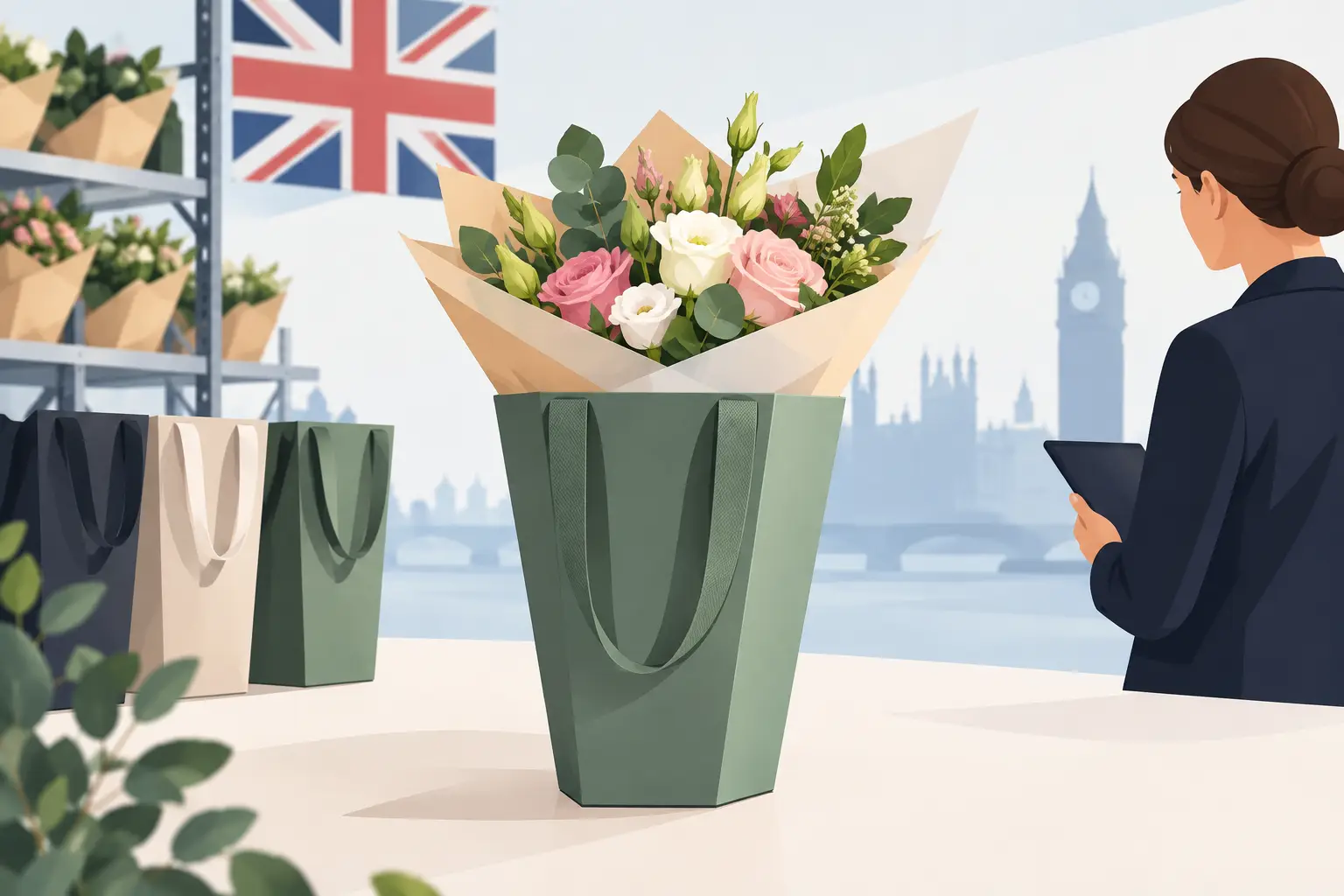
A bouquet bag is often the last thing a customer sees before leaving the shop, but it does far more than carry flowers. This bouquet bag review looks at the practical details that affect presentation, packing speed and whether the bag performs properly on a busy trading day. For florists, gift retailers and market traders, the right choice protects the finished work while giving it a clean, sale-ready appearance.
A bouquet can be carefully arranged, hydrated and wrapped, then lose impact because the outer bag is the wrong height, too narrow at the opening or too light for the stem weight. Equally, an oversized bag can make a small hand-tied bouquet look lost and increase material use. The best option depends on the bouquet style, the flower mix and how customers will carry it away.
Bouquet bag review: what matters in trade use
When assessing bouquet bags for wholesale purchasing, appearance matters, but the working details matter more. A good bag should be easy to open, hold its shape while packing and provide sufficient coverage without crushing the heads or catching on foliage. It also needs to suit the pace of your counter service.
Clear cellophane-style bouquet bags remain a dependable choice for many florists because they show off the flowers and work with any colour palette. They are especially useful when the bouquet itself is the main feature, from bright seasonal bunches to premium rose arrangements. Printed or tinted designs can add value at key occasions, but they need to fit the wider presentation rather than compete with it.
For everyday sales, a consistent bag range is usually more useful than an excessive number of designs. Keeping a few well-chosen sizes in stock helps staff pack quickly and makes reordering straightforward. It also avoids the common problem of using a bag intended for a larger arrangement simply because the correct size has run out.
Size is the first practical decision
Bag dimensions should be considered in relation to both stem length and flower-head spread. A tall, narrow bag can suit long-stemmed roses, lilies and formal gift bouquets. A wider format is generally better for mixed hand-tieds, country-style bunches and arrangements with substantial foliage.
The opening needs enough room for the bouquet to slide in without damaging petals. This is particularly relevant with hydrangeas, sunflowers, large-headed roses and delicate seasonal stems. If staff have to force flowers into the bag, the process takes longer and the finished bouquet can look compressed.
Length is equally important. A bag should cover the stems and any water source appropriately while leaving the flowers visible. Too much exposed stem may look unfinished or leave moisture management on show. Too much material above the flower heads can create unnecessary bulk, especially when the customer is carrying several purchases.
It is worth measuring your most popular bouquet formats before placing a larger order. Measure from the base of the stem wrap or aqua pack to the tallest flower head, then assess the widest point of the arrangement. This small check can prevent ordering a pack size that looks suitable on paper but is awkward in use.
Material, clarity and strength
Not all clear bouquet bags present flowers in the same way. High clarity is useful where colour, texture and freshness need to be immediately visible. Cloudy or heavily creased material can make a premium bouquet appear less polished, even when the flowers are excellent.
Strength should match the likely weight of the arrangement. A simple bunch of tulips places very different demands on packaging than a large mixed bouquet with wet stems, foliage and a water reservoir. Thin material may be suitable for lightweight grab-and-go flowers, while heavier-duty bags are a sensible choice for larger gift work and longer journeys.
The material should also be manageable at the bench. Bags that cling together or are difficult to separate can slow down production at peak periods such as Valentine’s Day, Mother’s Day and Christmas. If you have several staff members packing orders, consistency becomes even more valuable. Everyone should be able to reach for the right size and use it without a workaround.
Finish and presentation for different sales occasions
A plain clear bag is not a lesser option. It gives a tidy, versatile finish and allows ribbons, wraps, tags and the flowers themselves to do the visual work. For a florist selling a broad mix of everyday bouquets, it is often the most commercially sensible stock line.
Printed designs can be worthwhile for seasonal promotions, wedding work or specific retail displays. Florals, hearts, dots and celebratory patterns can help a ready-made bouquet feel more giftable. The trade-off is flexibility. A design that suits February may be less useful in late spring, and a strong pattern may not work with every flower recipe.
Tinted bags offer a middle ground. Soft colour can frame the bouquet without fully hiding it, helping to create a coordinated look for a collection or event. However, consider how the tint affects the apparent colour of the flowers. Whites, pale pinks and subtle pastel shades can look different through coloured packaging, particularly under shop lighting.
For premium work, the bag should support the level of the arrangement. A high-value bouquet with quality paper, ribbon and a branded card may need a clean, heavier-gauge clear bag rather than a busy print. The goal is not to make every bouquet elaborate. It is to ensure the outer packaging feels appropriate to the price point.
Water protection and handling
Bouquet bags are not a substitute for proper flower conditioning or secure hydration, but they can help contain the presentation around a water source. Where bouquets are sold with aqua packs or other water-retention methods, choose a format that gives adequate lower-stem coverage and leaves room for a neat finish.
Check how the bag performs when carried. A customer may hold it close to clothing, place it on a car seat or carry it with groceries. Any moisture should be managed before the bouquet reaches the bag. This protects the customer experience and reduces the risk of the packaging looking untidy at handover.
For deliveries, there is a further consideration: bagged bouquets may be packed into boxes, buckets or delivery containers. Very wide or stiff bags can add bulk and catch on neighbouring arrangements. If your business delivers regularly, test the selected bag with your usual transport method rather than judging it only at the counter.
Stock planning and wholesale value
A bouquet bag that works well is only helpful if it is available when demand rises. Trade buyers are usually better served by a core range of dependable sizes, with seasonal styles added around known peaks. This simplifies storage, reduces last-minute substitutions and gives staff familiar materials to work with.
Bulk purchasing can offer better unit value, but only where the quantities fit your turnover and storage conditions. Large packs of clear, all-year bags are generally easy to use through. Occasion-specific designs deserve more careful forecasting. Consider last year’s sales, planned promotions and the amount of display space available before committing to a larger quantity.
It is also efficient to order related presentation materials together. Bouquet bags, cellophane, wrapping paper, ribbon, gift cards, labels and carrier bags all affect the finished sale. Buying across these lines from one trade supplier can reduce purchasing time and help maintain a consistent look across the shop floor.
The Baggery Sundries supplies bouquet bags alongside the wider floristry and retail packaging essentials that busy businesses need to replenish. For buyers, the practical advantage is being able to place a consolidated wholesale order rather than spending time chasing separate suppliers for everyday consumables.
A sensible bench test before committing
Before making a bag your standard line, use it with a small range of real bouquets. Try a compact posy, a standard hand-tied arrangement, a long-stem bouquet and a heavier design with foliage. Assess how quickly it opens, how comfortably the bouquet enters, whether it sits well around the flower heads and how it looks after a customer carries it for a few minutes.
Ask staff for direct feedback. They will quickly identify issues such as awkward openings, insufficient width or bags that are difficult to separate with damp hands. If customers comment positively on the presentation or find the bouquet easier to carry, that is useful evidence too.
The right bouquet bag should become an uncomplicated part of your packing routine: correct in proportion, clean in appearance and dependable when the shop is busy. Start with the bouquets you sell most often, keep your core sizes available, and let the flowers remain the focus.