A buttonhole that loosens during a wedding, or a wired rose that rotates in its tape, is usually not a flower problem. It is a preparation problem. Knowing how to use floral tape properly gives wired work a neat, professional finish while keeping stems secure enough for handling, transport and wear.
For working florists, floral tape is a small consumable with a large effect on presentation. It covers wire, binds stems, supports delicate materials and creates a finish that looks deliberate rather than improvised. The key is using the right tape, stretching it correctly and applying only as much as the design needs.
What floral tape does
Floral tape is a pressure-sensitive, usually crepe-paper tape used to cover florist wire and bind floral stems. It becomes tacky when stretched, which activates the adhesive coating. This is why it behaves differently from ordinary sticky tape: it needs gentle tension as it is wound.
The tape is most commonly used for wired flowers, buttonholes, corsages, flower crowns and artificial flower work. It can also be useful when reinforcing a soft or split stem, securing foliage to a wire, or tidying the base of a small hand-tied design.
Green floral tape is the standard choice for natural stems and foliage. Brown works well for rustic designs, dried materials and exposed twig work, while white can suit wedding pieces with pale ribbon finishes. Colour matters most where the stem will be seen. If it will be fully covered by ribbon, tape colour is less critical, but a tidy application still prevents bulk underneath.
Before you start: choose tape and wire to suit the job
Floral tape is available in different widths. Narrow tape is usually the better choice for buttonholes, corsages, individual wired blooms and detailed work. Wider tape covers larger stems faster and can be useful when binding several wired elements together. Using tape that is too wide on a fine stem often creates a thick, uneven finish.
Wire gauge should match both the material and the intended use. Fine, delicate flowers need a lighter wire, while heavier-headed flowers, artificial stems and structural work need more support. Tape can secure and disguise wire, but it cannot compensate for wire that is too light for the flower.
Keep tape clean and dry. Damp fingers, flower food residue and plant sap can reduce grip and leave marks on pale tape. In a busy workshop, it is practical to keep a roll close to the wiring station alongside florist wire, cutters, scissors and ribbon rather than borrowing from a general packing bench.
How to use floral tape step by step
Start by cutting the floral wire to a workable length. For a buttonhole or corsage, leave enough wire to form a neat stem but avoid excessive length that will need trimming later. Insert or attach the wire to the flower or foliage using the wiring method appropriate to the material.
Tear or cut off a manageable length of tape. Although tape can be pulled directly from the roll while working, pre-cut lengths give more control when making small, detailed pieces. Hold the tape against the top of the wired section, just below the flower head or foliage base.
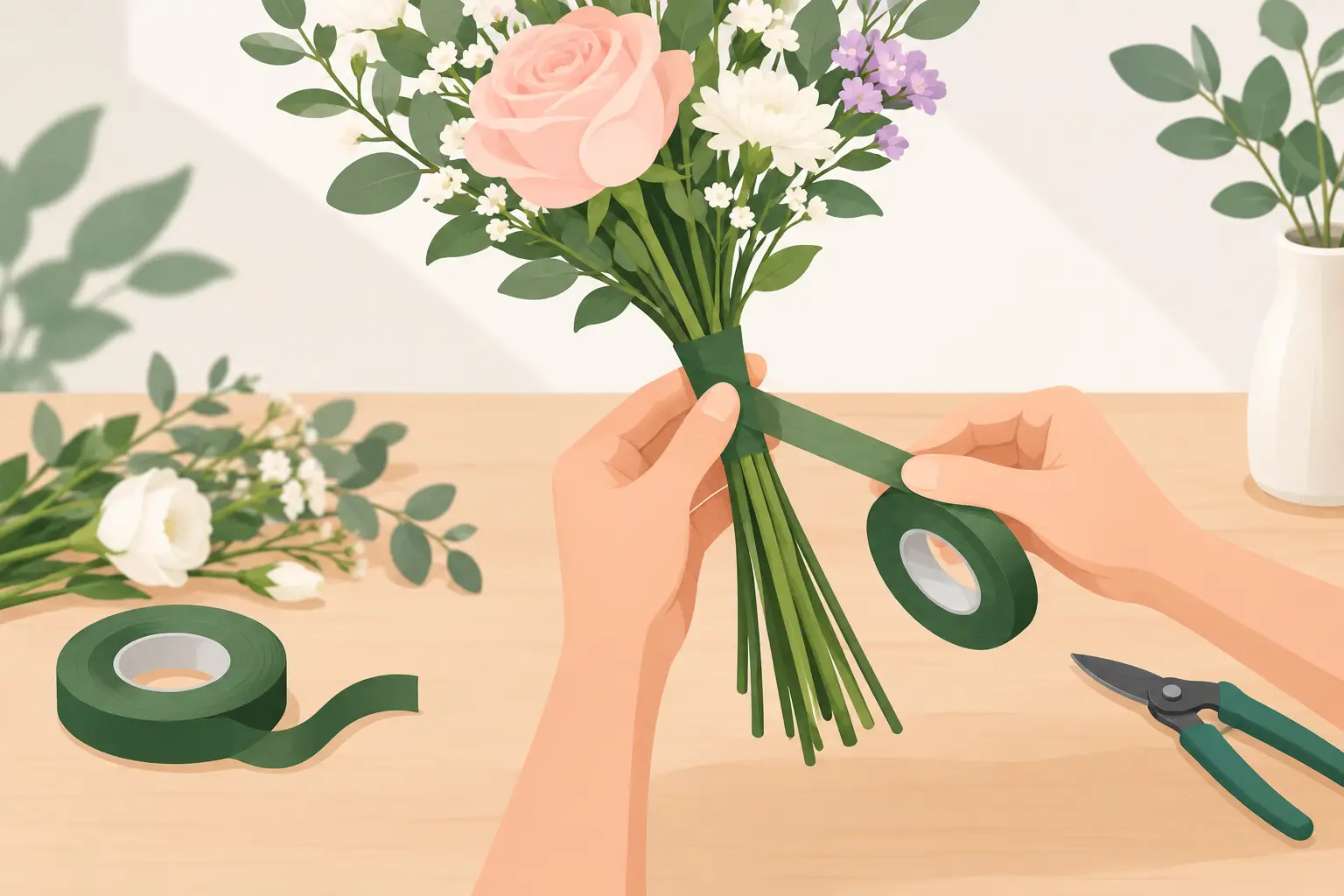
Stretch the tape lightly as you begin winding. You do not need to pull hard. A modest, consistent stretch is enough to activate the adhesive and allow each turn to grip the one beneath it. Wrap down the stem on a slight diagonal, overlapping each turn by around half its width.
As you work, keep the tape smooth and maintain gentle tension. If it twists, stop and unwind rather than trying to tape over the problem. A twisted section creates ridges, adds thickness and is more likely to lift at the edges.
When you reach the end of the wired section, stretch the tape once more, tear it cleanly and press the end against the stem. Rub it lightly between your fingers to help the final edge adhere. Trim the wire only after taping if you need the finished stem to be a precise length.
The finished stem should feel firm, even and covered without looking over-wrapped. You should not see loose wire, gaps in the tape or a large build-up beneath the flower head.
Taping wired flowers
For a wired flower, begin as close as possible to the calyx or base of the bloom. This hides the wire entry point and creates a natural transition from flower to stem. Work steadily downwards, checking that the flower remains facing the right direction as you turn it.
Some fresh flowers bruise easily, particularly around the base. Do not pull the tape so tightly that it compresses soft plant tissue. Where a flower is being used in a buttonhole, a neat but flexible stem is preferable to one wrapped so tightly it becomes stiff and artificial-looking.
For artificial flowers, floral tape is especially useful for covering cut or joined stems. The material is less vulnerable to pressure, but the same rule applies: use even overlap and avoid unnecessary bulk.
Taping buttonholes and corsages
A buttonhole needs to look good from close range, so tape quality is visible. Arrange the bloom, foliage and any accent flowers before you start taping. Once you are happy with the shape, hold all elements firmly at the binding point and begin the tape just below the flower heads.
Wrap tightly enough to keep the materials together, but not so tightly that stems are forced out of position. Continue down the full length of the wired stem. If you plan to finish with ribbon, tape first, then apply ribbon over a stable, smooth base.
Corsages may require extra reinforcement where several wires meet. Rather than adding thick layers over the whole stem, use a short additional section at the join, then continue with a single smooth layer. This keeps the work secure without producing a handle that is awkward to pin or hold.
Common floral tape problems and how to avoid them
If tape will not stick, the usual cause is insufficient stretch. Floral tape is designed to become adhesive as it is pulled. Try applying a little more tension, then press each turn into place. Cold tape can also feel less responsive, so warming the roll briefly in your hands can help in a chilly workroom.
If the tape snaps repeatedly, it is usually being stretched too aggressively or pulled at an awkward angle. Ease off the tension and wind with a smoother motion. Older stock can become dry or less flexible, which is another reason to rotate consumables and keep replacement rolls available during peak periods.
Bulky stems are generally caused by too much overlap, tape that is too wide, or repeated attempts to cover a rough join. For finer work, narrow tape and accurate wiring give a much cleaner result than extra wrapping. It is usually quicker to redo a poor join than to hide it under several layers.
Tape can also appear lighter than expected once stretched. This is normal with crepe floral tape. If colour matching is crucial for an exposed stem, test a short piece first rather than judging from the roll alone.
When floral tape is not the best answer
Floral tape is designed for binding and finishing, not for every floristry task. It is not a substitute for waterproof tape when securing floral foam to a container, and it is not the right choice for sealing bouquet packaging or fixing heavy display materials. Those jobs need tape selected for adhesion, moisture resistance or load-bearing strength.
It also has limits with wet, thick or woody fresh stems. On particularly damp materials, allow the stem to dry where possible, use a suitable wire support and avoid expecting the tape alone to carry weight. For larger arrangements, mechanics should be built into the design rather than concealed with tape.
Practical habits for consistent results
Good taping becomes faster with repetition, but consistency comes from setting up the job properly. Prepare wired components in batches, keep tape within reach and use the same wrap direction across a collection of buttonholes or corsages. This creates a uniform finish and makes it easier for another team member to complete the work if required.
For event orders, make one finished sample before committing to the full quantity. Check the stem length, pin placement, tape colour and whether the design will be finished with ribbon. This small check can prevent a time-consuming remake when dozens of pieces are already assembled.
Floral tape is inexpensive, but running out halfway through wedding work is avoidable. Keeping commonly used colours and widths as regular workshop stock helps protect both production time and presentation standards. The Baggery Sundries supplies practical floristry consumables for businesses that need to keep everyday work moving.
A clean taped stem is rarely the first thing a customer notices, which is exactly the point. It lets the flower, the colour and the finished design do the talking while the mechanics stay secure in the background.