A stem that slips from a hand-tied bouquet or a wreath bow that loses its shape can undo otherwise careful work. Floral wire is a small, low-cost floristry essential, but selecting the wrong gauge, finish or format can slow production and affect the finished presentation. For trade buyers, the right choice comes down to the job in hand, the materials being secured and the quantity needed through busy periods.
What floral wire is used for
Floral wire provides support, structure and secure fastening in fresh, artificial and dried flower work. It is commonly used to strengthen soft or short stems, bind bunches, attach picks, secure ribbon, form wreath bases and construct decorative displays. It also has a place beyond the workbench, helping garden centres, gift shops and event businesses prepare seasonal merchandise that must stay neat while being handled or transported.
The material is usually a metal core with a protective or coloured coating. The coating helps the wire blend into foliage and stems, while also making it more comfortable to handle. Green is the usual working colour for floristry, although white, silver and other shades can be useful where the wire forms part of the visible design.
The key point is that no single wire suits every task. A fine wire may be ideal for wiring delicate blooms, but it will not reliably support a heavy artificial stem. A stronger gauge holds its shape well, but may be too conspicuous or difficult to conceal in a light bridal design.
Choosing floral wire by gauge
Wire gauge indicates thickness. The numbering can seem backwards at first: a higher gauge number means a finer wire, while a lower gauge number means a thicker, stronger wire. The exact requirement depends on the flower, foliage or component being worked with.
Fine wire for delicate work
Fine floral wire is suited to lightweight blooms, small dried flower heads, delicate foliage and detailed buttonholes or corsages. It can be threaded or wrapped with minimal bulk, making it useful when a clean finish matters. It is also a sensible choice for securing smaller decorative items where a thicker wire would distract from the design.
The trade-off is strength. Fine wire bends easily, which is useful for shaping but less suitable for reinforcing a larger stem or building a structure that will be moved several times. It is best held as a working consumable rather than relied upon as an all-purpose wire.
Medium gauge for everyday bouquets
Medium-gauge wire is often the practical middle ground for general florist work. It can support many fresh flower stems, attach foliage, fasten ribbon and provide light reinforcement without looking overly heavy. For businesses making regular hand-tied bouquets, funeral tributes or vase arrangements, this is often the most frequently used option.
Where a team makes varied designs across the week, keeping a medium wire alongside finer and heavier alternatives avoids wasting time trying to make one roll do every job. It also helps control material use, as staff are less likely to double up fine wire simply to achieve the strength required.
Heavier wire for structure and displays
Thicker, lower-gauge wire is designed for strength. It is appropriate for heavier artificial flowers, larger dried stems, wreath frameworks, substantial bows and display work that needs to retain its form. Retailers creating seasonal window displays, garden centre arrangements or gift hamper decorations may find heavier wire especially useful where the finished piece needs to withstand handling.
Stronger wire can be harder to bend neatly by hand, particularly when used repeatedly during a large production run. Keep suitable cutters available and avoid using scissors, which can damage the blades and produce an untidy cut. For visible work, check that the coating remains intact after cutting and shaping.
Match the wire to the material
Fresh flowers, artificial stems and dried botanicals all behave differently. Fresh stems may need gentle reinforcement rather than a rigid support, especially where the design will be hydrated or placed in floral foam. Artificial stems are generally heavier and may need a firmer wire for joining, extending or positioning. Dried flowers can be brittle, so they benefit from careful handling and a wire fine enough to avoid splitting the stem.
Foliage also affects the decision. Fine-leaved material may conceal a wire easily, while sparse branches and eucalyptus-style stems leave little room for mistakes. Where the fastening will show, select a colour that sits quietly against the design or plan to cover the area with floral tape, ribbon or foliage.
For wreaths and funeral work, consider more than the initial hold. The wire must cope with the weight of the finished piece, delivery, display and collection. Saving a small amount on wire can be false economy if a design needs repair before it leaves the shop.
Wire formats that make production easier
Floral wire is available in several practical formats. Buying the correct format can make a noticeable difference to prep time and consistency across a busy bench.
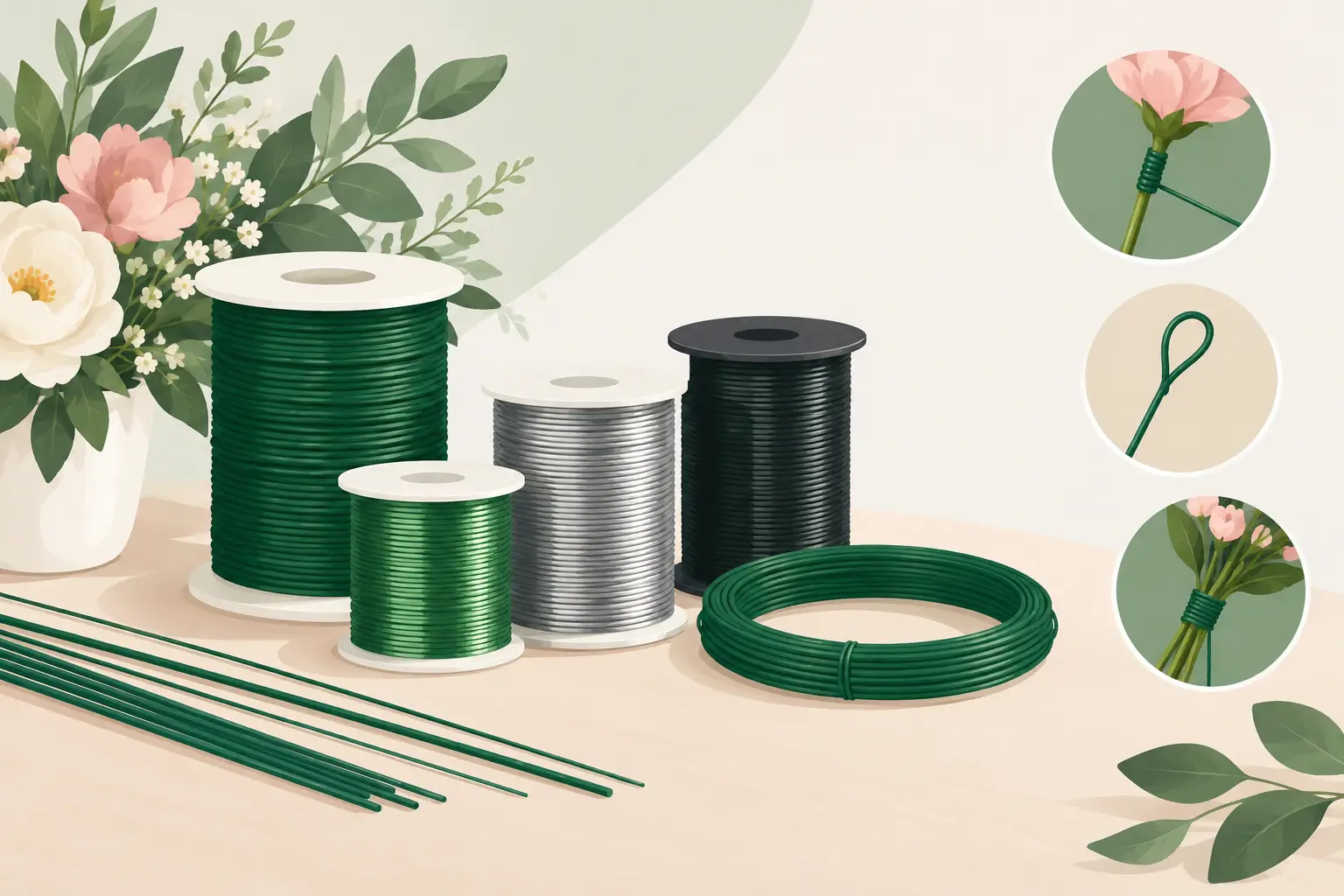
- Paddle wire is supplied on a dispenser, allowing long, continuous lengths to be pulled and cut as needed. It is useful for binding wreaths, creating garlands and securing repeated sections of foliage.
- Stub wires are pre-cut lengths, commonly used for wiring individual flower heads, attaching decorative picks and producing buttonholes. They save cutting time on detailed work.
- Reel wire offers a compact roll for general fastening and smaller tasks. It is useful where staff need flexibility rather than long runs of wire.
- Stem wire provides straight, rigid lengths for extending stems, supporting arrangements and making artificial or dried materials easier to position.
There is no need to stock every format in every gauge. A florist producing bridal pieces may use fine stub wires far more often than paddle wire, while a garden centre preparing Christmas wreaths may need the opposite. Review the designs your team makes repeatedly, rather than buying based on a one-off requirement.
Colour, coating and finish matter
Green paper-covered wire remains a dependable standard because it blends naturally with stems and foliage. Paper coating also gives a little grip, which can help when wrapping and binding materials. However, it can mark or soften if heavily exposed to water, so it may not be the best option for every wet-work application.
Plastic-coated wire can offer greater resistance to moisture and a smoother finish. It is often useful for artificial arrangements, outdoor decorative work and practical fastening jobs. Bare metal wire may suit certain craft or display applications, but it is rarely the first choice where the wire needs to disappear into a floral design.
A visible finish can be intentional. Silver wire works well with frosted winter decorations, while white is useful for light-coloured artificial flowers or wedding display work. When selecting a decorative colour, test it against the actual materials under shop lighting. A shade that looks discreet on a sample card can stand out once wrapped around pale petals or glossy foliage.
Buying floral wire for a working stockroom
For trade purchasing, availability and sensible pack planning matter as much as the individual product specification. Wire is easy to overlook until a large order, sympathy tribute or seasonal display is underway. Keeping a small range of core gauges and formats in stock prevents last-minute substitutions that compromise the job.
Start with the work your business carries out most often. A flower shop may need general-purpose green wire, fine wires for detailed work and stronger stem wires for artificial additions. A gift retailer may use a smaller selection, focused on bows, basket dressing and display repairs. Businesses handling Christmas, Valentine’s Day, Mother’s Day or wedding peaks should increase core stock before the rush rather than relying on emergency replenishment.
It also pays to store wire properly. Keep rolls dry, clean and close to the work area, ideally with cutters and floral tape in the same station. Label gauges clearly if several types are held together. This reduces wasted material and helps newer members of staff choose the right wire without interrupting production.
For businesses placing regular orders across floristry supplies, packaging and display materials, consolidating those essentials with one wholesale supplier can reduce ordering time and simplify stock control. The Baggery Sundries supports trade customers with a broad practical range for making, packaging and presenting products, helping busy businesses keep everyday consumables moving.
The best floral wire is not necessarily the strongest or the cheapest roll on the shelf. It is the one that holds securely, works efficiently with your materials and gives the finished arrangement the professional finish your customers expect.