A table arrangement that drinks dry before an event, or an artificial display with stems that will not stay in position, usually starts with the wrong base. The choice between wet versus dry floral foam is not a matter of preference: each material is made for a different job. Selecting the correct foam protects the finished look, reduces wasted stock and gives your team a more reliable result when work is busy.
Wet versus dry floral foam: the working difference
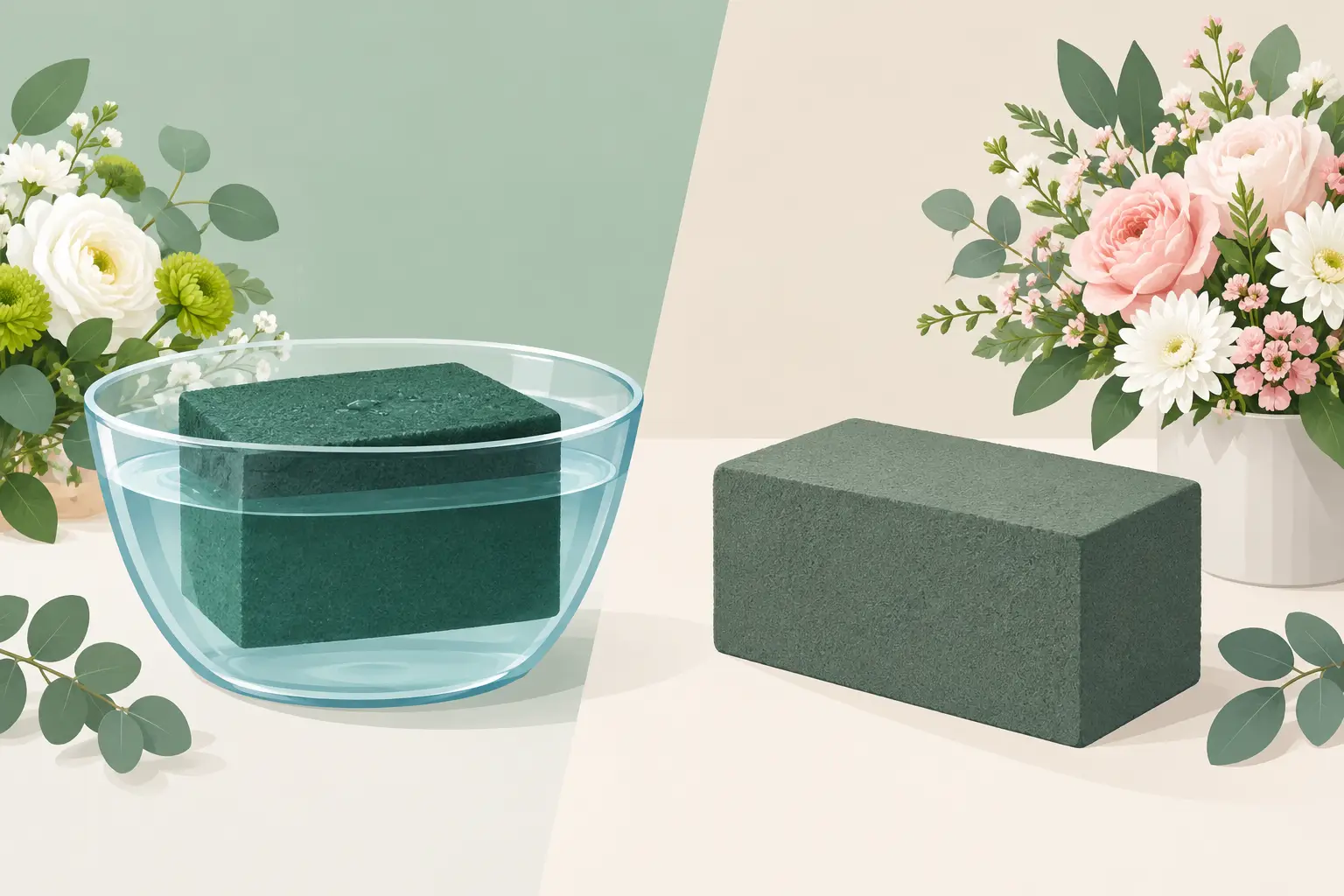
Wet floral foam is designed to absorb and hold water for fresh flowers. Once correctly soaked, its open structure supplies stems with moisture while holding them in the required position. It is the practical choice for arrangements where fresh-cut material needs hydration over several hours or days, such as funeral tributes, pedestal designs, table centres and floral gift arrangements.
Dry floral foam is denser and intended for artificial flowers, dried flowers and other permanent materials. It is not made to take up water. Its firmer composition grips artificial stems, wire and picks, allowing a display to keep its form without the need for a vessel of water.
The distinction matters because a block can look broadly similar on the shelf, yet perform very differently in use. Dry foam used with fresh flowers will not provide water, while wet foam is often too soft to give the secure hold needed for heavier artificial stems. Using the correct type from the outset avoids a remake later.
When wet floral foam is the right choice
Choose wet floral foam whenever fresh stems need to remain hydrated within the design. This includes work where flowers are arranged directly into foam rather than placed in a vase or water-filled container.
A fresh floral tribute is a clear example. The foam provides a stable base for building the outline, placing focal flowers and inserting foliage at varied angles. It also gives the stems access to water, helping the arrangement stay presentable during transport, service and display. For a florist managing several tribute orders, consistent soaking and preparation are as important as the choice of flowers.
Wet foam is also useful for table centres, floral letters, oasis-style bowls, baskets lined for fresh work and large event installations where containers cannot easily hold loose water. It can be cut to fit a suitable watertight tray, dish or support. The container still matters: wet foam must sit in something that prevents leakage and supports the finished weight.
How to soak wet foam properly
Place the block on the surface of clean water and allow it to sink under its own weight. Do not push it down or hold it beneath the water. Forced submersion can leave dry pockets in the centre, meaning some stems will not receive the water they need.
Once saturated, lift the foam carefully and let excess water drain before placing it in its container. Use a sharp florist’s knife to cut it to size. Crushing or tearing the block closes its structure and makes stem placement less clean.
Keep the arrangement topped up with water where possible, particularly in warm shops, event venues or during summer deliveries. Wet foam slows dehydration; it does not remove the need for sound flower conditioning. Fresh stems should still be prepared properly, with foliage below the insertion point removed and woody stems cut to take up water effectively.
Stem placement in wet foam
Make deliberate placements. Repeatedly inserting and removing a stem creates a hole that may no longer hold it securely or channel water efficiently. If a flower is positioned incorrectly, use a new area of foam rather than trying to repair the same hole.
Very thick, woody or brittle stems may need a pilot hole made with a suitable tool. This prevents the foam from splitting and reduces damage to the stem. For heavier designs, reinforce the construction with a proper container, florist tape, supports or mechanics suited to the arrangement. Foam holds stems, but it should not be expected to carry the full structural load of a large design on its own.
When dry floral foam is the better option
Dry floral foam is the straightforward choice for permanent arrangements. It works well in artificial flower displays for retail counters, window schemes, hospitality areas and seasonal merchandising, as well as dried flower designs that must stay in place without a water source.
Its density allows it to grip stems firmly. Artificial flower stems can be pushed directly into the foam, although heavy-gauge wire or unusually thick stems may require a pilot hole to avoid cracking the block. For a tall or top-heavy display, secure the dry foam into a pot, planter or basket first and ensure the finished container has enough weight in the base.
Dry foam is often easier to shape for compact containers and display props. Cut it slightly larger than the opening where appropriate so it fits tightly, then build the arrangement from the outline inwards. A clean, stable foundation is especially useful when producing repeated displays for a shop floor, restaurant tables or gift retailing.
Do not use dry foam for fresh arrangements simply because it feels stronger. It cannot supply moisture, and fresh flowers inserted into it will decline far more quickly than they would in properly hydrated wet foam or a water-filled vase.
Choosing foam by arrangement type
The quickest way to decide is to start with the material you are arranging, then consider the weight and setting of the finished piece. Fresh flowers and fresh foliage generally call for wet floral foam. Artificial stems, dried flowers, silk flowers and decorative picks call for dry floral foam.
There are exceptions in practice. A fresh bouquet displayed in a vase does not need foam at all. Some fresh work may be better built with reusable mechanics, chicken wire, pin holders or a vase, depending on the style, sustainability requirements and the vessel available. Likewise, dried stems in a very narrow-necked vase may stand securely without dry foam.
For trade purchasing, it is sensible to keep the format in mind as well as the foam type. Standard bricks suit everyday cutting and shaping. Rings, wreath bases, letters and pre-formed shapes save time where the design calls for a repeatable outline. A busy florist can reduce last-minute preparation by holding the common shapes needed for regular funeral, sympathy and seasonal work.
Common mistakes that cost time and stock
The most frequent wet-foam error is forcing a block underwater. It can look soaked while remaining dry inside. The next is allowing an arrangement to stand without enough water, especially near heaters, in direct sunlight or in a warm vehicle.
With dry foam, the usual problem is underestimating the final weight of the stems and decorations. A lightweight pot may tip once the arrangement is complete. Test the base before the display leaves the workbench, not after it reaches a customer site.
Another avoidable issue is choosing foam before selecting a container. Measure the internal space, check whether it is watertight and allow for the depth required to support your chosen stems. Cutting several blocks unnecessarily wastes a consumable that should be planned into the job cost.
It is also worth separating foam stock clearly in the workroom. Label shelves or storage boxes so that staff can identify wet and dry foam at a glance. During peak periods, that simple system helps prevent the wrong material being picked for a production run.
Handling, disposal and practical planning
Floral foam is a useful floristry mechanic, but it should be handled with care. Cut it cleanly and avoid creating unnecessary dust or crumbs. Keep offcuts contained, clean work surfaces after shaping and follow the local waste guidance that applies to your business. Do not wash foam pieces down sinks or drains.
Where a customer requests a lower-waste design, discuss the mechanics before production. A reusable vessel, pin holder, wire framework or carefully selected container may be more appropriate for the brief. That does not make foam unsuitable for every arrangement; it means the mechanic should match both the design and the customer’s expectations.
For regular trade work, reliable results come from keeping wet and dry floral foam in stock alongside compatible containers, trays, florist tape, wire, cellophane and finishing materials. The Baggery Sundries supplies floristry essentials alongside the packaging needed to present and transport completed work, making it easier to replenish everyday consumables in one wholesale order.
The best foam is the one that supports the flowers, stems and setting you have actually been asked to deliver. Decide that before cutting the first block, and the rest of the arrangement has a far better chance of arriving stable, fresh and ready to sell.