A bouquet that looks right on the workbench can lose its shape the moment it goes into unsuitable packaging. If you are asking what size bouquet sleeve to use, start with the finished bouquet, not the sleeve itself. Stem length, flower head spread, foliage volume and the type of presentation you want all determine whether the sleeve will support the sale or make it look cramped.
For trade florists and retailers, the aim is straightforward: choose a sleeve that protects the flowers, shows enough of the bouquet and gives staff a repeatable packing method during busy periods. The best size is rarely the biggest available. An oversized sleeve can make a small bunch look lost, while a sleeve that is too narrow can crush petals, pull stems together and slow down the wrapping process.
What Size Bouquet Sleeve Is Right?
Bouquet sleeves are usually assessed by two measurements: the width across the top opening and the overall length. Some styles are tapered, so the base is narrower than the opening. Others are square-cut or have a shaped top edge, which affects how much of the bouquet is visible once it is packed.
As a working rule, the top opening should be wider than the widest point of the finished bouquet by around 2-5cm. This gives the blooms enough room without leaving an excessive gap around the sides. For a bouquet with a 20cm flower head spread, a sleeve opening of roughly 24-25cm is often a sensible starting point.
Length should cover the stems securely while leaving the flower heads clear. A sleeve that reaches too high can hide the colour and texture customers are paying for. One that is too short may not keep the bouquet neat in transit, particularly for hand-tied designs with loose foliage or longer stemmed flowers.
The exact allowance depends on the flower type. Delicate heads such as roses, ranunculus and tulips benefit from more clearance than compact bunches of carnations or chrysanthemums. A bouquet with airy eucalyptus, ruscus or other extending foliage can also need a wider opening than its stem count alone suggests.
Start With the Bouquet Diameter
The most reliable measurement is the diameter of the bouquet at its widest point once it has been tied. Measure across the flower heads and foliage as they will sit when sold, rather than compressing them to fit a sleeve. This is particularly important for mixed bouquets, where the widest point may be above the tie point.
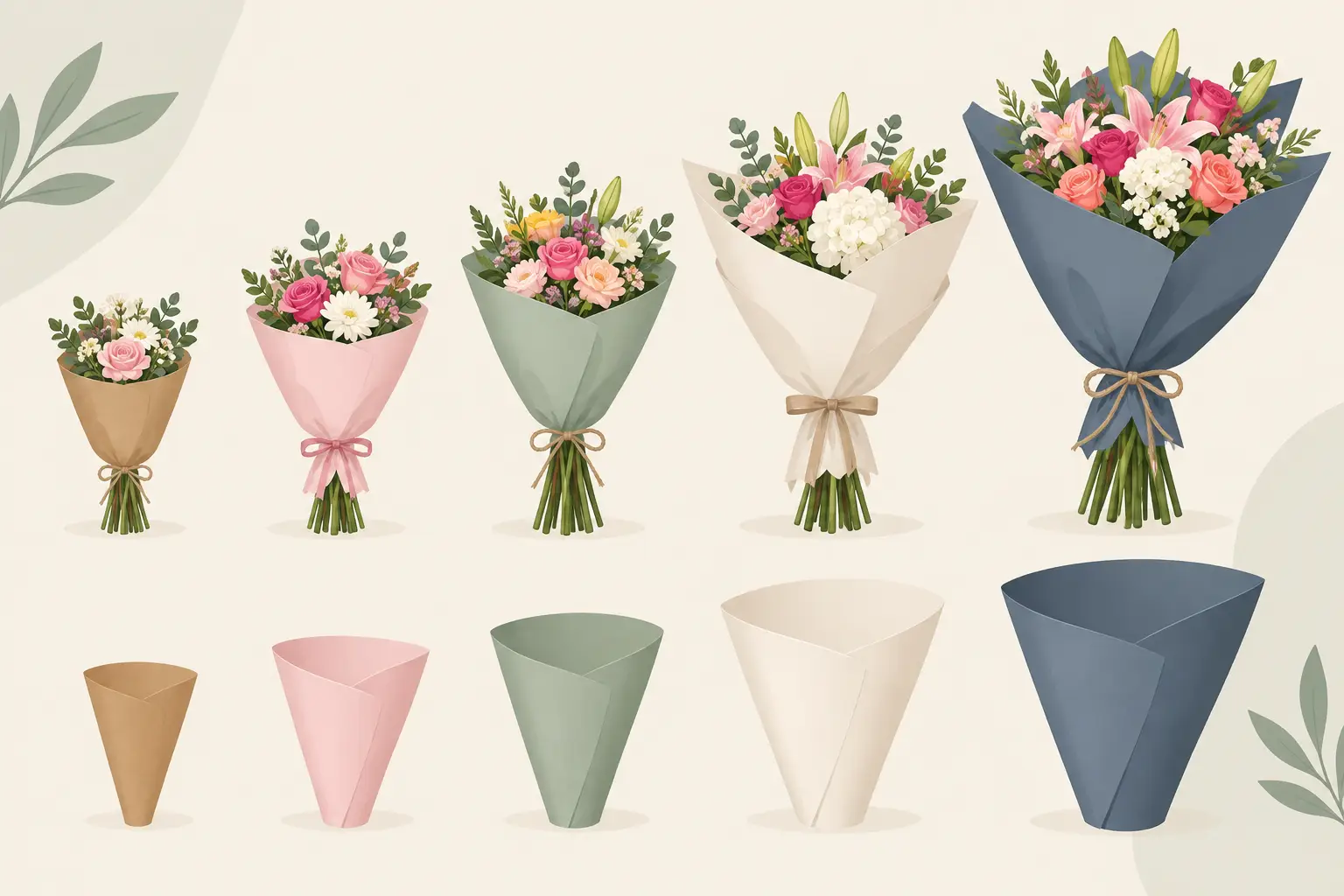
For smaller everyday bunches, a sleeve with an opening around 20-25cm will commonly provide a neat fit. Medium hand-tied bouquets often need an opening in the 25-35cm range. Larger gift bouquets, funeral tributes and fuller seasonal arrangements may require 35cm or more, depending on the volume of blooms and foliage.
These are guides, not fixed rules. Ten long-stemmed roses can sit comfortably in a relatively narrow sleeve if the heads are arranged close together. The same number of garden-style stems with large blooms, berries and foliage may need considerably more room. Measuring a finished sample saves wasted packaging and avoids guesswork when ordering in bulk.
Avoid measuring only the stem bundle
The tied stems can be much narrower than the presentation area above them. Choosing a sleeve based only on the handle width is one of the most common causes of crushed or poorly displayed bouquets. Always measure the flower head spread first, then check that the lower section will still accommodate the stems, water source and any protective wrap.
If you regularly make several bouquet sizes, keep a sample of each finished design near the packing area. Staff can quickly test sleeve options against the physical bouquet rather than relying on a name such as small, medium or large, which varies between product ranges.
Choose Sleeve Length for Stem Protection
A useful bouquet sleeve should support the stem length without covering too much of the product. For standard retail bouquets, the sleeve will often finish below the main flower heads, leaving the upper third or more of the bouquet on display. This creates a clean, professional look and makes it easier for customers to see the bouquet’s colour balance.
Shorter sleeves suit compact posies, grab-and-go bunches and arrangements sold in a vase or container. They provide enough structure to keep the stems together but allow the blooms to remain the focus. Longer sleeves are better for long-stemmed roses, lilies, sunflowers and mixed hand-tieds where the stems need added protection during handling and transport.
Consider how the bouquet is being sold. A counter collection bouquet may only need enough sleeve length to keep the shape tidy between the shop and the customer’s car. A bouquet travelling by courier, being carried around a town centre or placed into a carrier bag needs more protection. In that case, a longer sleeve and appropriate outer packaging are worth the extra material cost.
Match the Sleeve Shape to the Selling Style
Size is only part of the decision. The cut and material of the sleeve influence how the bouquet presents on the shop floor.
Tapered sleeves are practical for hand-tied bouquets because they follow the natural shape of the stems and help the arrangement sit securely. They are often a good choice for everyday florist work, ready-made bouquets and supermarket-style displays. A wider flared opening gives fuller bouquets room to show their shape while keeping the stem end controlled.
Square or straight-cut sleeves can suit bunches with a more formal, uniform profile. They are useful where you want a crisp retail finish and a consistent pack size across a range of bouquet recipes. However, they can appear loose around smaller bouquets unless the width is chosen carefully.
Clear cellophane-style sleeves let the flowers do the work and are useful when bloom colour is the main selling point. Printed, coloured or kraft-effect sleeves add more visual impact, but can obscure finer flowers if they are too tall or heavily patterned. For premium gift bouquets, the sleeve should frame the flowers rather than compete with them.
Allow for Water, Wrap and Add-Ons
The bouquet you measure must include everything that will be present at the point of sale. A water bag, wet wrap, stem pad or extra cellophane layer adds bulk at the base. Ribbon, a large bow, decorative picks or a gift card can also change how the sleeve sits.
Where bouquets are supplied with a water source, test the sleeve with the water pack in place. The lower section needs enough width to avoid stretching or splitting, particularly when the bouquet is lifted by the sleeve. If the water pack is bulky, it may be better to use a slightly wider sleeve rather than forcing the bouquet into a longer but narrow option.
For wrapped bouquets, consider the order of packing. Some florists place the bouquet into a clear sleeve first and add decorative paper outside it. Others use a presentation sleeve as the main outer wrap. Both methods can work, but they require different allowances. The second method generally needs more room for folds and securing tape.
Build a Practical Sleeve Range for Your Shop
Most businesses do not need every sleeve size on the market. A small, well-chosen range is easier to store, quicker for staff to use and more efficient to reorder. The right selection depends on the bouquets you make most often, not the occasional oversized commission.
For many florist shops, three core sizes cover a large proportion of day-to-day work: a smaller sleeve for posies and bunches, a medium sleeve for standard hand-tieds, and a larger format for premium or seasonal bouquets. Add a specialist long sleeve if roses, lilies or other long-stem flowers are a regular line.
Before committing to a larger wholesale quantity, pack representative bouquets from your usual range. Check the fit standing upright in a display bucket and when held by the stems. The sleeve should not buckle around the flower heads, slip down the bouquet or make the arrangement look narrower than it is. It also needs to be quick to apply when the shop is busy.
Colour and finish should be selected with the same practical approach. Clear sleeves are versatile and work across seasons. Neutral kraft-style or white designs can give a more premium finish without clashing with flower colours. Bright printed sleeves may suit promotional bunches, but can date quickly or limit how many bouquet recipes they complement.
Common Sizing Problems and How to Prevent Them
If flower heads are pressed against the sleeve, the opening is too narrow or the bouquet has been made fuller than the recipe allows. Do not rely on staff squeezing the bouquet to make it fit. This can mark petals and alter the intended shape.
If the sleeve slips down or gathers loosely around the stems, it is likely too wide, too long or the taper is unsuitable. A ribbon or staple may hold it in place, but it will not always solve an awkward fit. Choosing a more appropriate sleeve size produces a cleaner result and reduces packing time.
Where a bouquet looks top-heavy, the issue may be length rather than width. A longer sleeve can provide better stem control, provided it does not hide the flowers. Conversely, if a compact bouquet looks buried, reduce the sleeve length or choose a lower-cut style.
The most dependable approach is to standardise. Record the sleeve size used for each repeat bouquet recipe, including any seasonal variation with extra foliage or larger blooms. That gives your team a clear packing specification and makes ordering far more accurate.
A sleeve is a small part of the finished sale, but it carries the bouquet from workbench to customer. Test the fit on the bouquets you actually sell, keep the core sizes available, and let the flowers remain the focus.