A display can look perfectly presentable at opening time, then start dropping stems or showing tired blooms by lunchtime. Knowing when to replace floral foam helps you separate a flower-care problem from an arrangement-base problem, avoid unnecessary rework and keep finished designs fit for sale.
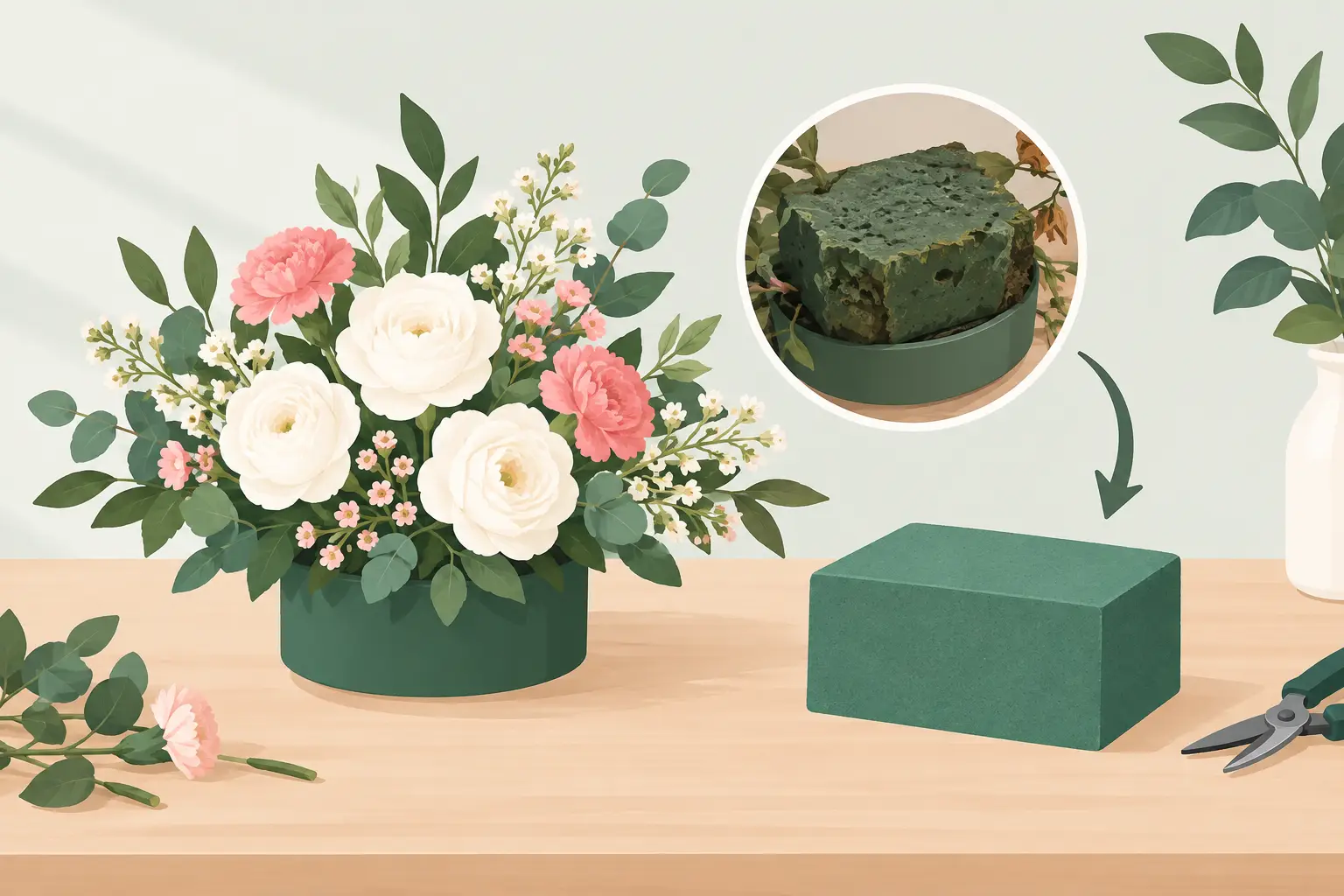
For most fresh arrangements, floral foam is not a material to top up, repair repeatedly or carry over to the next job. Once it has lost its structure, dried out, become heavily pierced or is no longer holding water cleanly, replacing it is usually quicker and more reliable than trying to rescue it. The right decision depends on the age of the design, the flower varieties used, how the foam has been handled and whether the arrangement is still being sold, displayed or delivered.
When to replace floral foam
Replace the foam if it is no longer giving stems stable support. A stem that rocks, leans or slips down into an enlarged hole may be easy to reposition once, but several loose stems usually mean the base has been overworked. This is particularly noticeable in tall, front-facing or asymmetrical designs, where a small movement can alter the whole shape.
Dryness is another clear sign. Fresh-flower foam should be kept properly hydrated from the outset and monitored while the arrangement is on display. If water is no longer available through the foam, flowers will deteriorate quickly, even when their stems were conditioned correctly. Do not assume that pouring water over a badly dried block will restore it evenly. It may not rehydrate through the centre, and the arrangement can remain unstable.
Replace it where water has become cloudy, smells unpleasant or contains obvious plant debris. Water quality matters most in designs held for several days, especially in warm retail areas, near sunny windows or during busy periods when arrangements are handled frequently. If an arrangement is still saleable but the foam and water have deteriorated, transferring suitable flowers into fresh, fully soaked foam can extend its useful display life.
Foam should also be replaced after substantial redesign work. Removing and reinserting a few stems is normal. Pulling out large sections, changing the height profile or rebuilding the focal area leaves channels that no longer grip stems effectively. A fresh base is the sounder option when the design has changed beyond minor adjustments.
Do not mistake tired flowers for failed foam
Not every fading arrangement needs new foam. Some flowers naturally have a shorter vase life than others, and heat, poor conditioning, damaged stems or stock that has already spent time in transit can be the cause. Check the individual stems before rebuilding the whole piece.
If the foam is still firm, evenly damp and free from unpleasant odour, remove only the spent blooms and replace them with fresh material. Recutting a stem where appropriate, taking off submerged foliage and keeping the water level maintained may be enough. This is often the most economical approach for counter displays and repeat-order work.
On the other hand, replacing wilted flowers without dealing with dry or contaminated foam merely resets the clock for a short time. The new stems need a clean, stable and hydrated base if they are to perform well for the customer.
Signs the foam can stay in place
A fresh-flower foam base can normally remain in use when it is holding water, the surface is intact, stems remain secure and only a small number of blooms need changing. For a short-lived event design, such as a same-day table arrangement, the foam may remain perfectly serviceable for the entire job.
Check water levels daily on arrangements that remain in the shop. Add water carefully to the container rather than disturbing the design. If the arrangement is in a non-transparent ceramic pot, basket liner or presentation container, make this check part of the morning preparation routine rather than waiting for the flowers to show stress.
Why reusing fresh floral foam causes problems
Fresh floral foam is designed to be pierced by stems, but every hole reduces the grip around the next stem. Once removed, a stem should not usually be placed back into the same hole if firm support is needed. Repeated use also creates air spaces and uneven water movement through the block.
There is a hygiene consideration too. Old plant material, cloudy water and bacterial build-up can shorten the life of fresh stems. Reusing foam from a previous arrangement may appear to save a block, but the cost of premature flower loss, an unstable design or a customer complaint is usually far higher.
For shop work, wedding orders and sympathy designs, treat wet foam as a fresh consumable. Build the arrangement once, maintain it well, and replace the foam if the design needs major reworking or has exceeded a sensible display period. This approach produces more consistent results and makes staffing routines easier to manage during peak trading weeks.
Fresh foam and dry foam are not interchangeable
The decision changes depending on the foam type. Wet floral foam is for fresh flowers and foliage that require a water source. It should be allowed to absorb water naturally rather than pushed under the surface, which can leave dry pockets inside the block. Cut it to fit the container before soaking where possible, as trimming a saturated block creates more mess and can weaken edges.
Dry floral foam is intended for artificial flowers, dried stems and other non-living decorative materials. It must not be soaked. In some dry-display applications, a block can be reused if it remains firm, clean and has not been heavily pierced. Even then, it is worth replacing it when stem holes are too large to hold picks securely or when the block begins to crumble.
Using the correct type from the start prevents a costly rebuild. Keep wet and dry foam clearly separated in the work area, particularly where several members of staff prepare displays or seasonal stock at once.
A practical routine for retail displays
For arrangements held in-store, assess foam condition alongside flower quality each morning. Look at water levels, test whether key stems are still secure and check for drooping foliage around the lower portion of the design. A quick inspection before opening is more efficient than rebuilding several arrangements mid-day.
During warm weather, central heating periods and major floral occasions, check again later in the day. High footfall, warm lighting and frequent movement can increase water loss. Larger arrangements, designs with thirsty foliage and stock displayed near entrances may need more attention than compact hand-tied work kept in a cooler area.
It also helps to date larger completed arrangements discreetly on the underside of the container or on job paperwork. This gives staff a realistic guide to how long the design has been on display and supports consistent decisions about reducing, refreshing or remaking stock.
Planning foam usage for busy periods
Floral foam is a small line item, but running short during Mother’s Day, Valentine’s Day, Christmas or wedding season can stop production immediately. Holding the right range of brick sizes, rings, letters, trays and container-friendly formats allows the team to build efficiently without forcing a design into an unsuitable base.
Order with the finished job in mind. Larger sympathy pieces, funeral tributes and event work need more than a rough estimate, because offcuts, fitting and contingency all affect usage. Keep dry foam separately for artificial and dried arrangements so that stock is not used accidentally on fresh work.
Trade buyers who consolidate foam, cellophane, ribbon, bouquet bags, tape and presentation containers in one order also reduce last-minute purchasing gaps. The Baggery Sundries supplies floristry essentials alongside everyday packaging, helping busy businesses replenish the practical items that keep preparation areas moving.
Disposal and safer handling
Floral foam should not be put down sinks, drains or toilets. Small particles can enter waterways, so collect trimmings and used material as you work. Follow your local waste guidance for disposal and keep offcuts contained rather than allowing them to scatter around the bench or loading area.
Use a sharp, suitable knife for cutting blocks and keep the work surface clear. Once foam is saturated, it is heavier and more prone to damage at the corners, so support it from underneath when transferring it into a container. Good preparation protects both the arrangement and the time invested in it.
A reliable rule is simple: maintain fresh foam while it is clean, hydrated and structurally sound; replace it when it can no longer feed or hold the flowers properly. That small check at the bench protects the quality customers see when they take an arrangement home.