

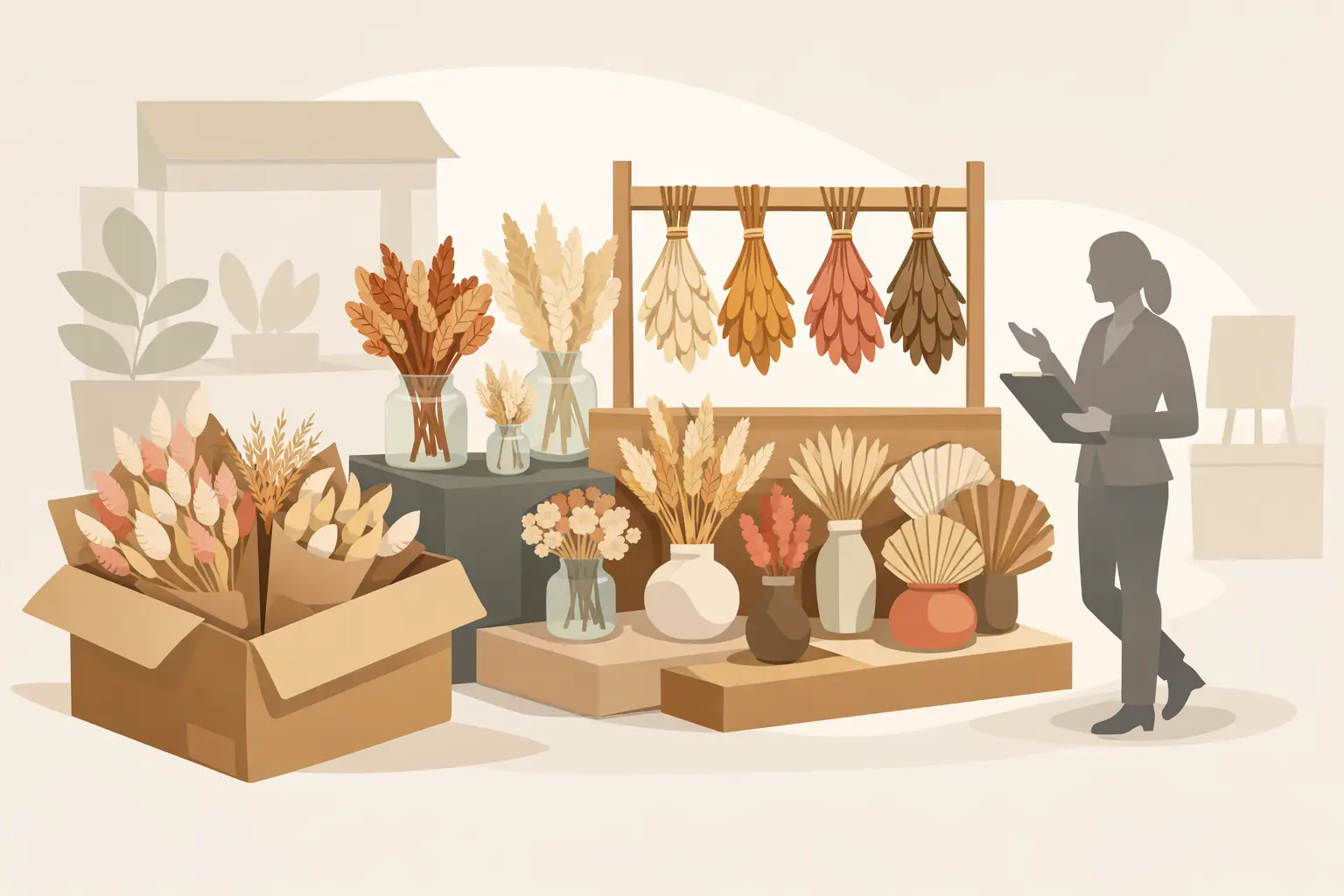
A dried arrangement should still look considered on day 30, not tired, dusty or difficult to sell. That is why dried flowers wholesale buying is less about choosing attractive stems in isolation and more about selecting stock that suits your customers, display space, packaging and replenishment routine. For florists, gift shops, garden centres and hospitality businesses, the right range can create dependable sales well beyond the short life of fresh flowers.
Choosing dried flowers wholesale for trade use
Dried flowers have become a practical all-season category. They bring texture to bouquets, wreaths, window displays, table arrangements and gift lines without the daily waste and conditioning associated with fresh stock. They are particularly useful where staff time is limited, where customers want longer-lasting gifts, or where a business needs display material that remains presentable between deliveries.
Wholesale purchasing gives you greater control over consistency. Buying individual bunches from mixed retail sources can leave you with uneven stem lengths, changing shades and little confidence that a successful line can be repeated. A trade order allows you to build a more coherent selection around the colours, finishes and pack sizes that work in your business.
The best approach depends on how the stock will be sold. A florist making bespoke work may prioritise varied textures and longer stems. A gift retailer may need smaller bunches that fit neatly into pre-priced bundles. A restaurant or pub may want neutral, low-maintenance stems for table vessels that are not handled often. Start with the job the flowers need to do, then buy the range around it.
Build a range that is easy to merchandise
A good dried flower display needs enough variation to look interesting, but not so much that it becomes difficult to maintain. Choose a core palette that works with your shop, your regular packaging and the seasons you trade through. Natural, bleached and muted tones often give broad year-round appeal, while stronger colours can create a useful focal point for autumn, Christmas, weddings or themed gifting.
Consider proportion as well as colour. Tall or linear stems give height to a floor vase or window arrangement. Fuller heads and grasses add volume to hand-tied work. Fine filler stems soften gaps and help smaller arrangements look finished. When these elements are bought with a clear purpose, staff can create displays quickly without opening several bunches only to find unsuitable material.
It is sensible to carry a small number of reliable lines rather than overbuying every new finish. Dried products can last well when stored correctly, but they still take up space and can lose their appeal if a colour has passed its selling window. Test less familiar styles in modest quantities, watch what customers pick up, then add depth to proven sellers on the next order.
Check the details before placing a wholesale order
The appearance of dried flowers online or in a product image is only one part of the purchasing decision. Stem length affects whether a product will work in a tall vase, a hand-tied bouquet or a compact gift box. Bunch size affects your cost per arrangement and the amount of packaging you will need. Natural materials also vary, so slight differences in shape, texture and tone should be expected rather than treated as a fault.
Think about handling requirements. More delicate stems may suit vase displays and carefully packed gift arrangements, while sturdier materials can be better for market stalls, busy retail areas and larger installations. If customers will transport finished arrangements themselves, consider whether the flowers can be secured without crushing heads or catching on cellophane.
Storage matters too. Keep dried flowers away from damp, direct sunlight and areas of heavy footfall where stems can be knocked or bent. A dry stockroom, shelving that supports the bunches and clearly labelled containers will make reordering easier. Avoid placing stock near food preparation areas or anywhere condensation is common. Even a durable product needs clean, organised handling to stay saleable.
Match packaging to the finished product
Dried flowers can look premium with relatively simple packaging, provided the materials are chosen to protect the product. Clear sleeves show the texture and colour of a ready-made bunch, while bouquet bags can give a more polished finish for gift sales. Tissue, kraft paper or coloured wrapping can support your branding and help separate fragile heads from outer packaging.
For hand-tied bunches, the wrap should be wide enough to protect the fullest point of the arrangement rather than just the stems. For boxed or basketed gifts, make sure the flowers are held securely so they do not move in transit. A display that looks excellent on the counter can quickly lose value if it reaches the customer with snapped stems or loose debris in the bag.
This is where buying across categories saves time. Ordering dried materials alongside ribbon, cellophane, bouquet bags, baskets, labels and carrier bags helps ensure the whole product is ready to sell. It also reduces the risk of having flowers in stock but no suitable way to present or pack them during a busy trading week.
Buy quantities around turnover, not just unit price
Wholesale value is not simply the lowest cost per bunch. A larger order may offer better buying value, but only if you have the space to store it well and the turnover to use it while it remains attractive. Businesses with regular bouquet work, wedding orders or strong gift traffic can usually justify deeper stock. Smaller retailers may be better served by a tighter selection that is replenished more often.
Review sales by product type, not only by total dried flower revenue. You may find that grasses sell steadily as add-ons, while statement stems only move when used in a complete display. That distinction helps you set sensible minimum stock levels. It also gives staff a clearer brief on what to use first when making up arrangements.
Seasonality should be planned ahead. Autumnal shades, festive stems and wedding-focused colours need to arrive early enough for display building and customer ordering. Leaving the purchase until the selling period has already started can limit your choice and put unnecessary pressure on packing and merchandising. Keep core neutral stock available, then add seasonal lines with a clear end date for promotions or bundled products.
Make replenishment straightforward
The most useful wholesale range is one that fits into normal trading, not one that creates extra work. Keep product notes for the stem types, colours, pack sizes and packaging combinations that sell well. Photograph successful in-store displays for staff reference and record how many bunches each arrangement uses. These small checks make repeat ordering faster and help maintain a consistent finish when different team members are preparing stock.
For businesses buying floristry supplies, packaging and display materials regularly, consolidating requirements with one trade supplier can also simplify purchasing and deliveries. The Baggery Sundries provides dried and artificial floral materials alongside the practical products needed to arrange, package, price and sell them, helping trade customers keep essential lines together.
A well-chosen dried flower range earns its shelf space when it is easy to turn into a finished product. Buy with the display, the packaging and the next replenishment in mind, and each bunch has a clearer route from stockroom to sale.












