A single thirsty stem can let down an otherwise well-made bouquet. Hydrangeas soften at the edge, rose heads dip and presentation loses its freshness before the customer has even left the shop. This guide to florist water tubes covers the practical decisions behind using them well: selecting the right size, filling them cleanly and making them work for hand-tied work, single stems and boxed designs.
Water tubes are a small but useful floristry consumable. They allow individual stems to travel with their own water source when a vase, floral foam or water-filled container is not suitable. For trade customers, the benefit is straightforward: better conditioning at the point of sale, less waste from delicate stems and a more professional finish on arrangements that need to be carried, displayed or delivered.
What florist water tubes do
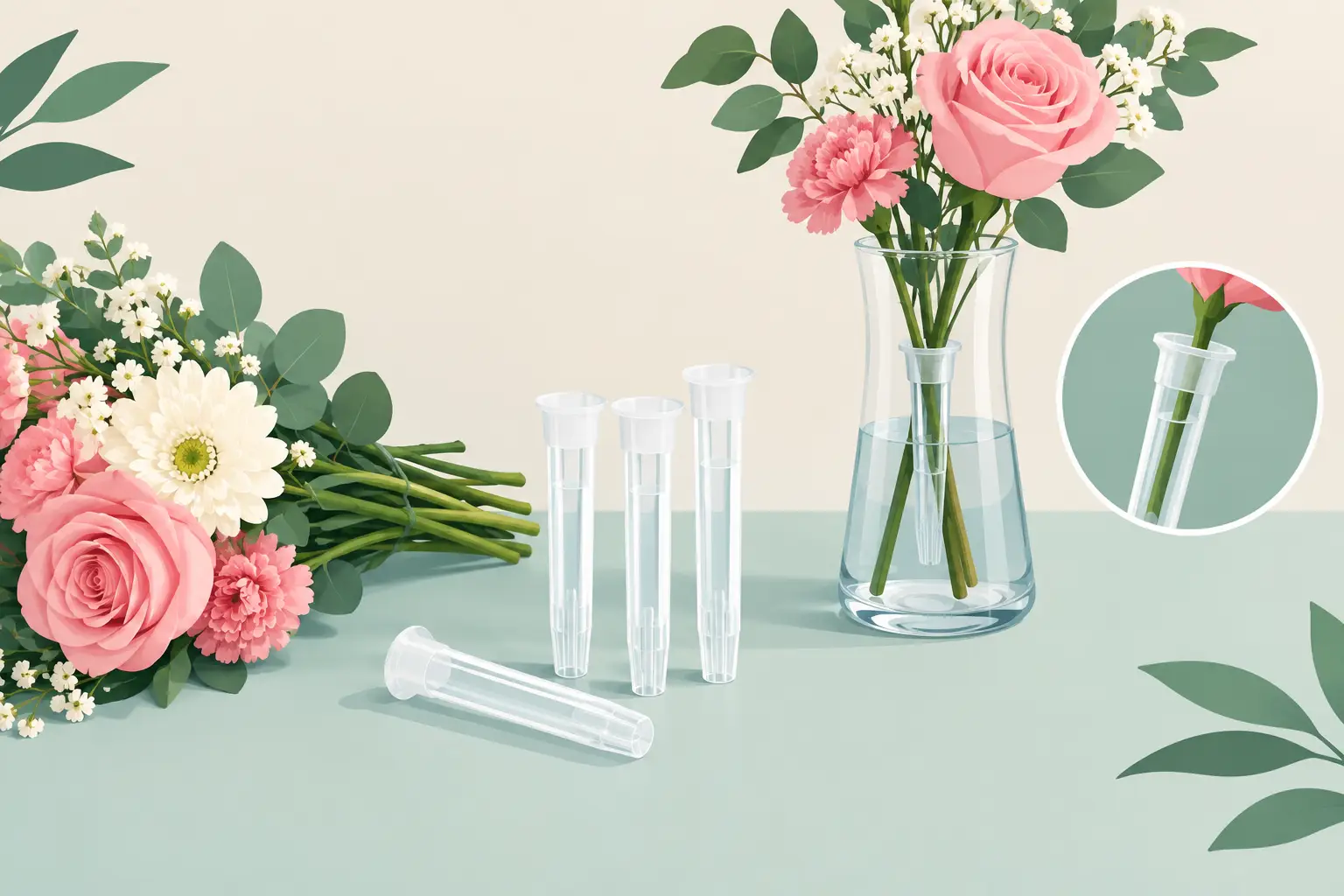
Florist water tubes are narrow plastic reservoirs, generally supplied with a fitted cap. The stem passes through the cap and into the water held in the tube. Once secured, the tube can be concealed within wrapping, foliage, a bouquet collar or the structure of an arrangement.
They are most commonly used for thirsty focal flowers and for stems that need support away from a water source. Orchids, roses, hydrangeas, gerberas, anthuriums and foliage with a short cut stem can all benefit, although the correct approach depends on the variety and how the finished piece will be handled.
A water tube is not a substitute for proper conditioning. Flowers still need a fresh, clean cut and should be hydrated before arranging where possible. The tube extends their access to water after they leave the bucket or vase. It is particularly useful for wedding work, funeral tributes, gift bouquets, corsages, buttonholes and display pieces with exposed stems.
Choosing the right florist water tube
The best tube is the one that holds enough water without looking bulky or slipping around the stem. Capacity, opening size and overall length matter more than buying one standard size for every job.
Match the tube to the stem
A fine-stemmed freesia or spray rose does not need the same reservoir as a large-headed hydrangea. Small tubes are tidy and economical for lighter material, while larger-capacity tubes provide more useful hydration for flowers with thicker stems or a longer selling period.
The cap opening needs to grip the stem closely enough to reduce leaks, but it should not crush soft tissue. If the opening is too loose, water may escape when the bouquet is moved. If it is too tight, forcing the stem through can split the stem or damage the bloom. Keep a small selection of sizes on hand if your work regularly includes varied flower types.
Length is also worth considering. A longer tube gives greater capacity but may be difficult to hide in a compact hand-tied bouquet. A short tube is easier to position in buttonholes or wired work but will not support a stem for as long. For a same-day collection, a smaller tube may be entirely adequate. For wedding flowers travelling to a venue or arrangements going out on delivery rounds, extra capacity is usually worthwhile.
Consider where the arrangement will sit
A tube that works well in a wrapped bouquet may be unsuitable for a glass vase arrangement, where it can be visible and unnecessary. For a gift bouquet being transported without a water-filled bag or container, it is a practical safeguard. In a foam-based design, tubes are useful for individual flowers that need more water than the foam can reliably supply, especially demanding varieties placed high or away from the main water source.
Think about the route from workbench to customer too. If the arrangement will be upright and handled gently, a standard capped tube may be enough. If it will be laid flat in a box, secured in a vehicle or carried a distance, test the seal before it goes out. A leaking tube can mark wrapping, soften tissue paper and create an avoidable complaint.
How to fill and use water tubes properly
Clean working practices make a noticeable difference. Use clean tubes and fresh water, and avoid dipping stems into a tube that has been sitting open on the bench. Bacteria build quickly in warm conditions and can shorten vase life rather than improve it.
Fill each tube close to the top, leaving just enough space to fit the cap without overflowing. A small jug with a narrow spout gives better control than filling directly from a tap. Once filled, fit the cap firmly and make sure the opening is clear.
Recut the flower stem with clean, sharp secateurs or a knife before placing it into the tube. The cut should be clean rather than crushed, as damaged stem tissue struggles to draw water. Insert the stem straight through the cap and far enough into the reservoir to remain submerged as the flower is moved.
It is sensible to hold the tube upright for a moment and check for drips before adding it to the design. This simple check is especially valuable with large-headed flowers, as their weight can pull the stem to one side and loosen a poor fit.
For hand-tied bouquets, position the tube within the stems rather than at the outside edge. It should be supported by surrounding foliage or flower stems, not left to hang from the bloom alone. In wired wedding work, tape can help secure a tube discreetly, but do not wrap so tightly that the stem is pinched or the cap is distorted.
Where water tubes earn their place
Water tubes are often most valuable where the customer sees flowers at their best but cannot immediately place them in a vase. A single long-stem rose sold from a counter display, for example, can remain fresher during the journey home when the stem is protected with a tube and suitable packaging.
They are equally useful in mixed bouquets containing one or two water-hungry stems. Rather than overcomplicating the entire bouquet structure, the florist can give those stems their own supply. This can be a good compromise when using presentation wraps that are not designed to hold water.
For wedding florists, tubes can reduce risk during set-up. Buttonholes, corsages and flower crowns often spend hours out of water, particularly in summer venues or warm cars. The tube needs to be hidden and proportionate, but even a modest water source can help protect a key bloom until photographs and the ceremony are complete.
Funeral work is another case where placement matters. For tributes that will be displayed for extended periods, water tubes can support individual flowers in areas that dry more quickly. They should be integrated securely and never allowed to show in a way that distracts from the finished tribute.
Avoid the common mistakes
Overfilling is a frequent issue. Water expands and shifts as a bouquet is carried, so a tube filled right to the point of overflow is more likely to leak. Leave a small margin and test it.
The other mistake is treating every flower alike. Woody stems may need a larger opening or a different hydration method; fragile stems may split if forced through a standard cap. If a tube does not fit naturally, change the size rather than forcing the stem.
Do not use old water or leave filled tubes exposed for long periods before inserting flowers. A tube is a small reservoir, which means water quality matters. Clean preparation is quicker than remaking a tired bouquet later in the day.
Finally, do not let the tube become the only support for a heavy flower. It is designed to provide water, not carry the full weight of a large bloom. Build the arrangement so the surrounding stems, wrap or mechanics take the strain.
Stocking water tubes for busy periods
For regular floristry work, water tubes are worth treating as a core consumable alongside floral foam, cellophane, ribbon, tape and bouquet packaging. They are inexpensive compared with the value of a finished bouquet, and running out during Valentine’s Day, Mother’s Day or wedding season can leave you improvising with less reliable methods.
Keep them dry, clean and easy to reach at the conditioning area. Stocking more than one size avoids using oversized tubes where a neat finish matters or undersized ones where hydration time is critical. If you supply flowers alongside gifts, cards or retail packaging, placing water tubes within the wider ordering routine also makes replenishment easier.
The Baggery Sundries supports trade customers who need to bring floristry materials and practical packaging together in one wholesale order, helping busy businesses keep essential supplies moving.
The best use of a water tube is usually the least noticeable one: a flower that arrives fresh, stands proudly and gives the customer no reason to think about the mechanics behind it.