

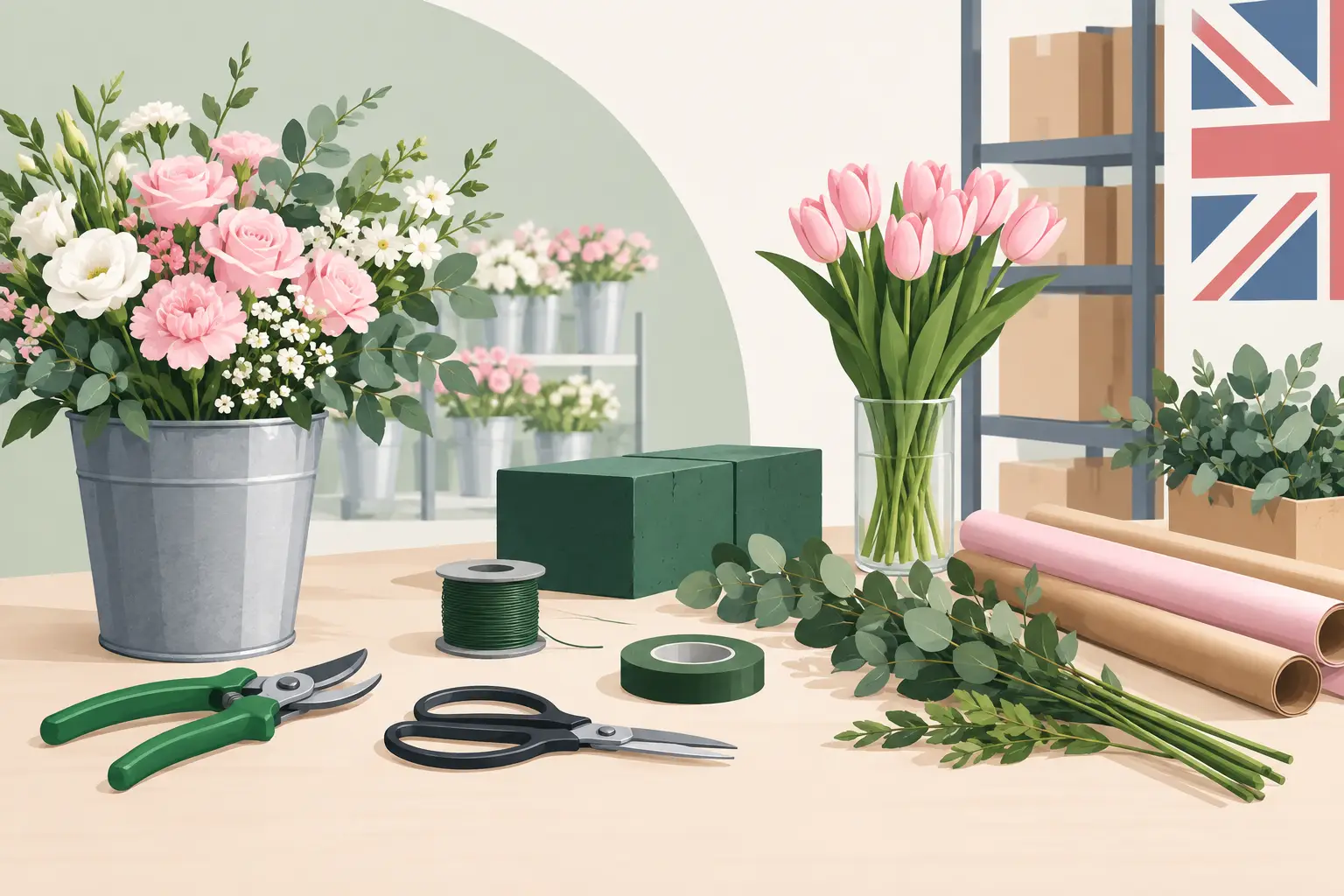
A missing roll of tape, blunt pair of cutters or shortage of bouquet sleeves can hold up a profitable day far more quickly than most florists expect. Buying floristry tools wholesale UK is not simply about obtaining a lower unit price. It is about keeping the bench working, maintaining a consistent finish and avoiding last-minute buying when orders are already waiting.
For independent florists, gift retailers, garden centres and market businesses, the most practical approach is to buy the everyday essentials in sensible quantities, alongside the packaging and display materials needed to sell the finished product. That reduces admin, helps keep presentation consistent and gives staff the right materials when trade is at its busiest.
What counts as essential floristry equipment?
Tools should earn their place on the workbench. The core requirement is usually straightforward: equipment that cuts cleanly, supports efficient conditioning and arranging, and helps produce a bouquet or display that looks professional when it leaves the shop.
Florist scissors and secateurs are central to daily preparation. Use scissors for ribbon, paper, cellophane and lighter stems where appropriate, and reserve secateurs for thicker, woody stems. This distinction matters. Cutting wire with ordinary scissors quickly damages the blades, while using one tool for every material can slow down production and lead to untidy finishes.
Floral knives remain useful for florists who prefer a clean stem cut during conditioning, particularly on softer stems. They require safe handling and regular replacement, so they may not suit every mixed-experience team. For many businesses, good-quality secateurs, scissors and wire cutters cover the majority of day-to-day work.
Other practical consumables are just as important as the cutting tools. Floral foam, floral wire, stem tape, bindwire, pins, adhesive and water tubes all support different styles of work, from hand-tied bouquets to funeral tributes and larger event pieces. The right mix depends on the work you regularly produce, not on buying every possible item in the category.
Match the tool to the job
A wedding florist making wired buttonholes will use more fine wire, tape and smaller cutting tools than a busy high-street florist focused on same-day bouquets. A garden centre may need dependable basic equipment and attractive packaging in higher volumes. A pub, restaurant or farm shop creating simple table arrangements may only need a compact selection of foam, containers, scissors and seasonal display materials.
Buying with the actual task in mind avoids both overstocking and frustrating gaps. Review what is used over a typical fortnight, then allow extra cover for known busy dates such as Valentine’s Day, Mother’s Day, Christmas and local wedding season peaks.
Floristry tools wholesale UK buyers should order together
The finished arrangement is only one part of the sale. Customers notice the bouquet wrap, the ribbon choice, the care card and the way the item is carried from the premises. Ordering tools without considering the materials around them can create unnecessary repeat orders and inconsistent presentation.
A trade order often works better when it brings together arranging essentials, bouquet wrapping, retail packaging and point-of-sale requirements. For example, floral foam and wire can be purchased alongside cellophane, bouquet bags, kraft paper, tissue, ribbon, carrier bags, labels and cards. That is particularly useful for businesses selling both flowers and gifts, or those that package food and retail goods alongside floral products.
There is a commercial benefit as well. Consolidating regular purchasing with one wholesale supplier reduces the time spent chasing small orders from multiple places. It also makes it easier to standardise the bags, wrapping and labels used across the business. A uniform presentation looks more considered, whether the sale is a single bunch of flowers or a premium gift hamper.
Stock levels: buy enough without filling the storeroom
Wholesale buying does not always mean ordering the largest pack available. The best quantity is the one that suits turnover, storage space and the shelf life of the product.
Floral foam, tape, wire and packaging tend to be regular-use lines that can be held in larger quantities when space allows. More seasonal materials, distinctive ribbon colours and specialist containers need a more measured approach. Trend-led colours can be excellent for a planned range, but they can become dead stock if bought without a clear sales opportunity.
It helps to separate products into three groups: daily essentials, regular replenishment lines and seasonal or project-specific stock. Daily essentials should have a clear reorder point – the amount at which a new order must be placed rather than merely considered. Regular lines can be checked weekly. Seasonal stock should be planned around confirmed events, expected footfall and how much room is available once it arrives.
For a small shop, a simple stock sheet can be enough. Record the product, pack size, usual weekly use, minimum quantity and supplier lead time. The aim is not complicated inventory management. It is to stop a busy Friday exposing that the last roll of clear wrap was used on Wednesday.
Check compatibility before committing to bulk
A low wholesale price is not good value if the product does not work with your usual presentation. Check the width and length of bouquet sleeves, the gauge of wire, the colour and finish of ribbon, and whether bags will accommodate your most common bouquet sizes. The same applies to containers, baskets and vases.
Where possible, standardise a small number of dependable formats. A few well-chosen sleeve sizes, paper colours and bag options are easier for staff to use quickly than an overcomplicated range. Keep specialist alternatives for premium orders, themed events or customer requests.
Protecting quality from prep bench to customer handover
Floristry materials have to perform under pressure. A hand-tied bouquet may be made in minutes during a rush, transported in a carrier bag and carried home in poor weather. The packaging needs to support the product without making the job slower.
Cellophane and bouquet bags help protect flowers and contain moisture, while tissue and kraft paper give a more considered outer finish. Ribbon adds value, but it should be easy to cut, tie and replenish. Water tubes and suitable containers can help where stems need hydration during collection or delivery.
Do not overlook pricing and sales materials. Labels, price guns, display signs and cards help staff complete the sale cleanly and consistently. These items are often inexpensive, yet running out can disrupt the whole retail process. They belong on the same purchasing plan as floral supplies, not as an afterthought.
Choosing a wholesale supplier for repeat trade orders
Price matters, but it is rarely the only consideration for a working business. Stock availability, pack sizes, product breadth and delivery reliability often have a greater effect on day-to-day profitability. A supplier with a wide range can save considerable time if you need florist essentials, retail packaging and point-of-sale materials in the same order.
Look for clear product information and a catalogue that makes it easy to identify related items. If you know exactly what you need, ordering should be quick. If you need an unusual size, colour or specialist item, access to knowledgeable sourcing support can be just as valuable. Not every required product will appear in a standard range, particularly for events, seasonal displays or bespoke packaging requirements.
The Baggery Sundries combines floristry supplies with practical packaging, display and retail consumables, helping trade customers source routine requirements from one place. With more than 4,000 stocked products and a warehouse-led operation, the focus is on useful availability rather than unnecessary complication.
Delivery timing should also fit the way you trade. Urgent replenishment is sometimes unavoidable, especially after a strong weekend or an unexpected event order. However, the most dependable businesses use fast delivery as a safeguard, not as their main stock system. Plan core lines early and keep urgent ordering for genuine exceptions.
Build a buying routine that supports busy weeks
Set one regular time each week to check the bench, packaging area and stockroom. Compare what is physically there with orders booked in for the next seven to fourteen days. This allows you to order before a shortfall becomes urgent and gives time to adjust for bank holidays, local events or seasonal demand.
A good wholesale order should leave you ready to make, wrap, price and hand over the product without hunting for separate supplies. When tools, foam, wire, packaging and sales materials are planned together, your team can focus on the work customers actually see: fresh flowers, well-finished arrangements and a professional service at the counter.












