

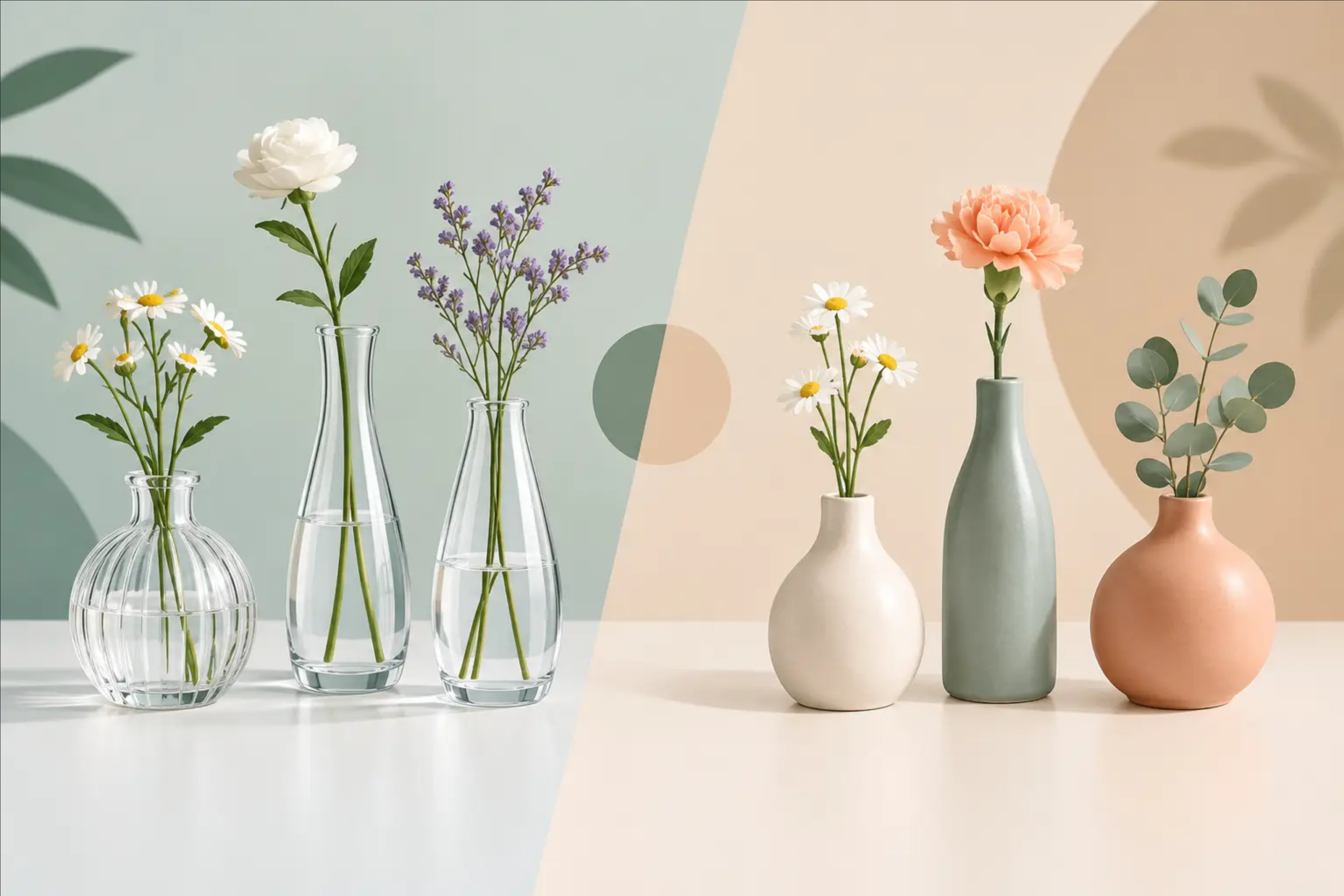
A single stem can become a sale when it is presented properly. For florists, gift shops, garden centres, pubs and restaurants, choosing between glass or ceramic bud vases affects more than the look of a display. It influences shelf appeal, breakage levels, cleaning time, transport, unit cost and how easily customers can picture the item in their own home.
Bud vases are small, but they work hard. They make modest flower bunches look intentional, give leftover stems a retail purpose and provide an easy add-on alongside cards, gifts and bouquets. The right material depends on where and how the vase will be used.
Glass or ceramic bud vases for trade displays
Glass bud vases are usually the practical starting point for florists and retailers who want maximum flexibility. Their clear finish suits almost any flower colour, container style or seasonal theme. They allow the stem, water level and flower head to remain visible, which works particularly well with single roses, tulips, ranunculus, spray stems and small stems of dried material.
Ceramic bud vases offer a more finished decorative look. Available in neutral, gloss, matt or coloured finishes, they can form part of a gift range without needing further styling. A simple white or stone-effect ceramic vase can suit a contemporary homeware display, while richer colours can support seasonal collections or a more individual retail identity.
Neither is automatically the better seller. A florist focused on quick-turnaround everyday stems may find glass easier to merchandise and replenish. A gift retailer building curated displays may see stronger value in ceramic pieces that look substantial on their own. In many shops, a mixed range is the most commercially useful option.
When glass bud vases make the most sense
Glass is a reliable choice where visual versatility matters. It does not compete with the flowers, allowing the arrangement to remain the focal point. This is useful when stock changes frequently or when staff need to make up displays quickly from whatever fresh flowers are available that week.
For wedding work, event tables and restaurant settings, glass also has a clear advantage. Matching vessels can be grouped in quantity without making a table feel heavy or over-styled. Narrow-necked glass bud vases help keep stems upright, meaning even a small quantity of flowers can create a neat, consistent display across several tables.
From a buying perspective, clear glass is straightforward to carry over from one season to the next. It is less tied to a particular colour trend than a strongly coloured ceramic vase. That reduces the risk of holding slow-moving stock after Christmas, Valentine’s Day or a spring promotion has passed.
There are trade-offs. Glass shows water marks, fingerprints and residue more readily, so displays need regular attention. It is also prone to breakage, especially in busy retail environments, market stalls or venues where items are moved often. A small chip or crack should take a vase out of use immediately, both for presentation and safety.
For glass stock, check the neck opening before buying in volume. A very narrow neck is ideal for one or two stems but can frustrate customers who expect to use the vase for a small posy. A slightly wider opening gives more freedom, although stems may need trimming or support to avoid looking loose.
Where ceramic adds value
Ceramic bud vases are particularly effective when the vase itself is part of the purchase decision. Their opacity hides stem ends and cloudy water, making them more forgiving in long-lasting dried, artificial or mixed-media arrangements. This can be useful for retailers that want display pieces to remain sale-ready over several days without constant water changes.
A ceramic vessel can also give a single stem greater perceived value. A simple seasonal bloom in a weighty, well-finished vase feels more like a ready-made gift than a flower in a plain container. For farm shops, gift departments and independent retailers, this creates an opportunity to sell a compact floral gift at an accessible price point.
Colour needs careful consideration. White, cream, grey, black and soft natural tones are usually the safest choices for repeat trade purchasing because they suit different flowers, occasions and shop fixtures. Brighter ceramics can attract attention, but they should be bought with a defined display plan. A vase in a bold seasonal colour may sell quickly during a promotion and then become harder to move once the display changes.
Ceramic is not unbreakable. It generally feels more solid than thin glass, but it can chip, crack or break if dropped. Matt finishes can also mark more easily than glazed surfaces, while textured designs may take longer to clean. For hospitality use, choose shapes that are stable and manageable for staff to wipe down between tables.
Choose the shape before the material
Material matters, but shape often determines whether a bud vase is genuinely useful. A vase may look attractive on a shelf yet be awkward to fill, unstable when watered or too shallow for the stems customers are most likely to buy.
Tall, narrow forms suit single long-stemmed flowers and create height without taking up much room on a counter or table. Shorter round styles are better for compact garden flowers, small posies and dried stems. Bottle-shaped vases are popular for minimal arrangements, while wider bases offer useful stability in customer-facing areas.
Before committing to a bulk order, consider four practical checks:
- The base should be broad enough to remain stable with a taller flower head.
- The opening should suit the stems and quantity customers are likely to use.
- The vase should hold enough water for fresh flowers without looking oversized.
- The overall height should work on shelves, tables and in gift packaging.
If bud vases will be sold as a flower-and-vase package, test the finished product rather than judging the empty vessel alone. Put in the stem length you expect to use, add water, wrap it if required and see how it travels. This small check can prevent costly problems with presentation and packing later.
Buying for flowers, gifts and hospitality
Florists can use bud vases to make productive use of shorter stems and blooms left from larger bouquet work. A single flower in a small vase can be sold as an impulse gift, added to a sympathy order, or used to dress a counter display. It also provides an accessible option for customers who want something more thoughtful than a loose stem but have a limited budget.
Gift retailers may gain more from creating complete display stories. Pair bud vases with cards, candles, artificial stems, dried flowers or small homeware items, allowing customers to see an easy gifting solution. Keep the display close to tills or at the entrance where compact, ready-to-carry purchases perform well.
For pubs, restaurants and cafés, practicality comes first. Select vases that do not obstruct sightlines across tables, are stable around plates and glasses, and can be washed efficiently. Clear glass can keep a dining table light and unobtrusive, while ceramic can help match an established interior scheme. It depends on whether the flowers should blend into the setting or become a stronger design feature.
Market traders and mobile florists should account for transport from the outset. Smaller, stackable or easily boxed shapes are less troublesome to move than delicate statement pieces. Glass needs careful separation in transit, while ceramics benefit from protective packing that prevents rubbing and chipped edges. Ordering outer packs that fit your storage and selling pattern is usually more useful than simply choosing the lowest unit cost.
Merchandising bud vases to encourage add-on sales
Bud vases sell best when customers can immediately understand their purpose. An empty line of vases may look like homeware; a few filled examples show what a single stem, a sprig of foliage or a dried flower can achieve. Keep sample arrangements simple enough to replicate with stock already on sale.
Group vases by colour, height or material rather than mixing every style together. This gives the display a more organised appearance and helps shoppers compare options quickly. In a florist shop, place a small selection near single stems or wrap bars. In a gift setting, use different heights in threes or fives to create interest without overcrowding the shelf.
Clear pricing is essential for small-ticket items. If offering a vase and flower combination, state whether the flower is included and make the total price easy to see. Staff should also know which stems suit each size, particularly when a customer wants a quick recommendation.
For regular replenishment, it is sensible to retain a core range of neutral, useful shapes and introduce more distinctive colours or finishes in smaller quantities. This keeps everyday purchasing dependable while leaving room for seasonal variety. The Baggery Sundries supplies trade customers who need practical display and floristry products alongside their wider packaging requirements, making it easier to plan stock around how it will actually be sold.
A well-chosen bud vase does not need a large arrangement to earn its space. Keep a dependable glass option for flexible floral work, add ceramic where colour and gift value support the display, and choose shapes your customers can use confidently long after the flowers have changed.












