

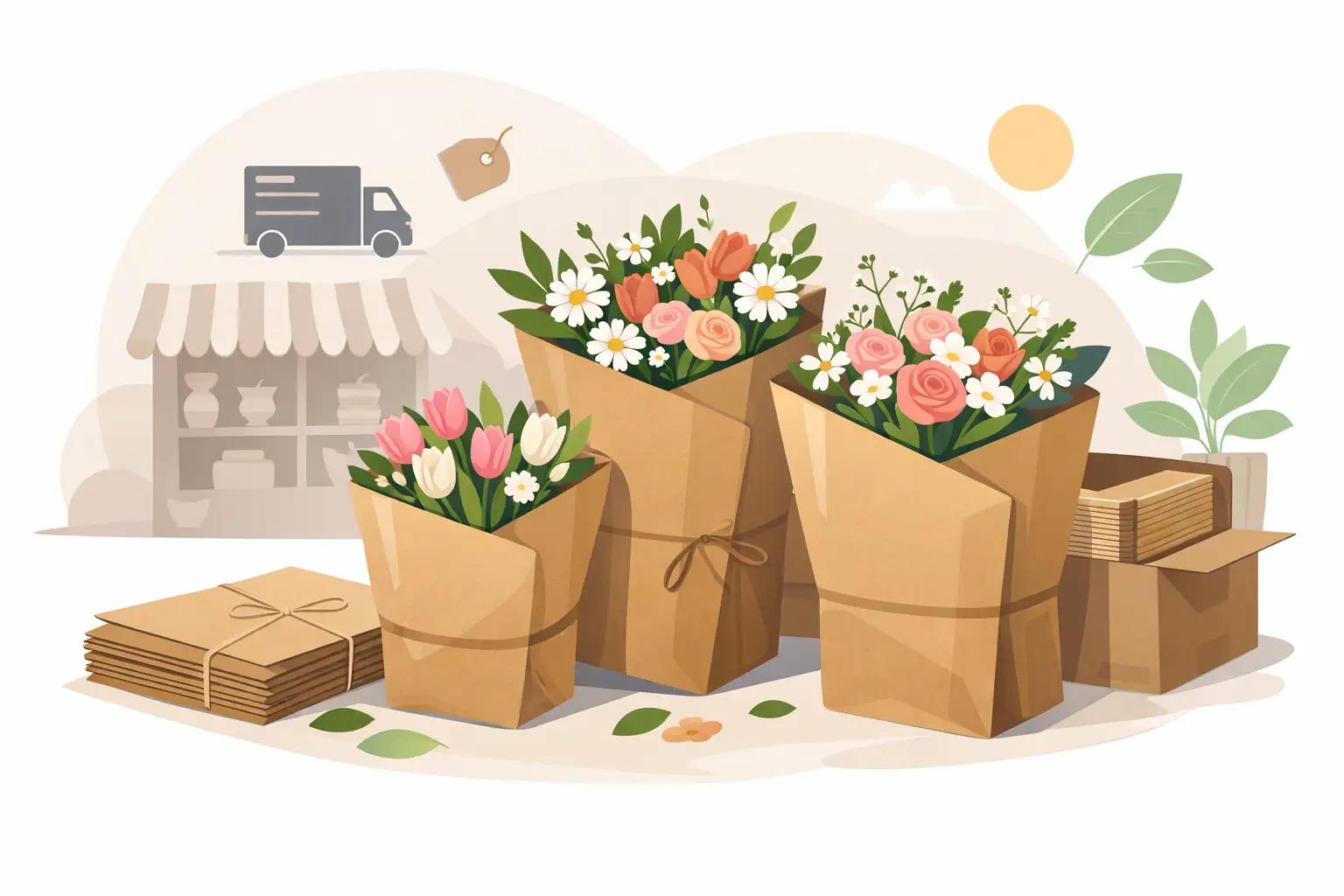
A busy flower shop can use through a surprising number of bags before lunchtime, particularly around Valentine’s Day, Mother’s Day and weekend weddings. Buying kraft flower bags wholesale helps keep a dependable supply on hand while giving bouquets a clean, natural presentation that works across everyday stems, hand-ties and gift flowers.
For trade buyers, the right bag is not simply a finishing touch. It needs to fit the bouquet, hold its shape while being handled, complement the flowers and be available when stock needs replenishing. The most practical buying decision comes from matching bag size, material and quantity to the way your business actually sells flowers.
Why kraft flower bags suit everyday floristry
Kraft paper has a straightforward appearance that customers recognise as natural and understated. It works equally well for a bunch of seasonal tulips, a country-style hand-tie or a more polished gift bouquet finished with ribbon. The neutral brown tone allows flower colours to do the work, rather than competing with them.
It also gives independent florists, farm shops and gift retailers a presentation option that does not depend on a particular season or trend. A plain kraft bag can be dressed up for a premium bouquet with tissue and a quality ribbon, or used simply for quick counter sales. That flexibility matters when one packaging line needs to cover several price points.
Kraft bags are particularly useful where customers collect pre-made bunches. They give stems a more finished appearance than a basic sleeve alone and make it easier to carry the flowers from shop to car. For retailers selling flowers alongside cards, gifts or food, the material also sits comfortably beside other paper-based packaging and display products.
Choosing kraft flower bags wholesale by bouquet size
Bag dimensions should be led by the widest and tallest bouquets you regularly sell, not just the smallest bunches. A bag that is too narrow can crush heads or force stems together. One that is excessively large may make a modest bunch look lost and can waste packaging spend over a busy month.
Start by considering the typical stem length after flowers have been conditioned and prepared for sale. Short gift bunches and posies need a compact format that supports the flowers without hiding them. Standard hand-ties need room around the flower heads, with sufficient depth for the stem ends. Larger presentation bouquets may need a wider opening, especially when foliage creates volume.
It is sensible to hold more than one size if your shop sells a mixture of grab-and-go bunches and made-to-order work. A smaller bag for everyday sales and a larger option for premium bouquets usually provides more control than trying to make one size do every job. The additional stock line is often justified by better presentation and less waste.
Think about the bag opening and stem position
The top opening affects how the finished bouquet sits. A generous opening gives blooms room and makes it easier for staff to place a hand-tie into the bag without damaging delicate petals. It is especially useful for roses, hydrangeas, peonies and mixed bouquets with a broad flower head.
Consider where the stems will finish. Some florists prefer the bag to cover the lower stems while leaving the bouquet visible above; others use a taller bag to create a more enclosed gift presentation. Neither approach is automatically better. The right choice depends on your usual bouquet style, the amount of wrapping used underneath and whether flowers are sold with water-filled packaging.
Paper weight, finish and practical handling
Not all kraft flower bags perform in the same way. Paper weight influences how well the bag stands up to repeated handling, while the finish affects the impression it gives at the counter. A lighter-weight option may suit high-volume, low-cost bunches, but it needs to be fit for the weight and shape of the flowers being packed.
A sturdier bag is often the better choice for fuller bouquets, gift work and retail displays where bags are handled by several customers before purchase. It can also give staff more confidence when packing quickly during peak periods. However, heavier paper is not always necessary for simple bunches, so buying the highest specification across every line can add cost without adding value.
Where flowers are sold with wet stems, moisture management needs thought. Kraft paper can mark or soften if it comes into direct contact with water. A suitable inner wrap, flower sleeve or water-retaining method can help protect the bag and keep the overall presentation tidy. Test your chosen combination with the bouquets you sell most often before committing to a larger quantity.
Build a packaging combination that works at the counter
A flower bag rarely works alone. In day-to-day floristry, it is part of a practical packing sequence: prepare the stems, add any water source or protective wrap, position the bouquet, finish with tissue or cellophane where needed, then secure it with ribbon, raffia or a label.
The best combination depends on the look you are trying to achieve and the journey the flowers must make. For a quick bunch collected locally, a kraft bag with a simple label may be enough. For a gift bouquet travelling in a car or being delivered, an inner layer of cellophane can offer useful protection and help contain moisture. A ribbon finish can then lift the presentation without slowing staff down too much.
Keeping these items available from the same wholesale supplier makes replenishment easier. Rather than placing separate orders for bouquet bags, tissue, cellophane, ribbon and carrier bags, trade customers can plan a more complete packaging order around the work carried out in the shop each week.
How much wholesale stock should you hold?
Wholesale purchasing should reduce the risk of running out without creating unnecessary storage pressure. The right quantity depends on sales volume, supplier lead time, available stockroom space and how many bag sizes or designs you carry.
Start with a realistic view of weekly usage. Count the number of bouquets and bunches normally sold, then allow for busier days and seasonal peaks. Valentine’s Day, Mother’s Day, Christmas, graduation periods and local events can change bag consumption sharply. If you make wedding work, allow separately for the bags needed to protect and present collection orders.
A sensible reorder point is the level at which you still have enough bags to trade normally while a replacement order is being processed and delivered. This is more reliable than waiting until the last pack is opened. For fast-moving essentials, holding a reserve carton is usually more cost-effective than losing time trying to find an emergency alternative at short notice.
Storage conditions also matter. Keep paper bags clean, dry and away from damp areas of the workroom. Store them flat where possible, with the most frequently used size close to the packing bench. Clear labelling prevents staff from opening the wrong pack during a rush and makes stock checks quicker.
Avoid common buying mistakes
The usual problems are easy to prevent. Ordering only one bag size can leave staff improvising on larger bouquets. Choosing purely on unit price can result in paper that does not suit the weight, moisture or handling demands of your flowers. Buying an untested style in bulk can create a costly packaging line that slows down the counter rather than helping it.
It is also worth avoiding a mismatch between the bag and the rest of your presentation materials. Kraft works well with natural raffia, coloured tissue, clear cellophane and many ribbon styles, but the finished look should still reflect your shop. A modern florist may prefer crisp black-and-kraft contrast, while a garden centre may favour softer seasonal colours and simple labels.
For businesses that regularly buy floristry supplies alongside packaging and point-of-sale essentials, The Baggery Sundries can help simplify trade purchasing across those everyday lines. The aim is not to overcomplicate bouquet packaging, but to keep the right materials ready for the next busy trading day.
A well-chosen kraft flower bag does its job quietly: it supports the bouquet, protects the presentation and helps every sale leave the counter looking properly finished.












